Laughter is the best medicine!




Camp Quality aims to provide accurate, helpful and trustworthy information for families. Read our publishing standards.
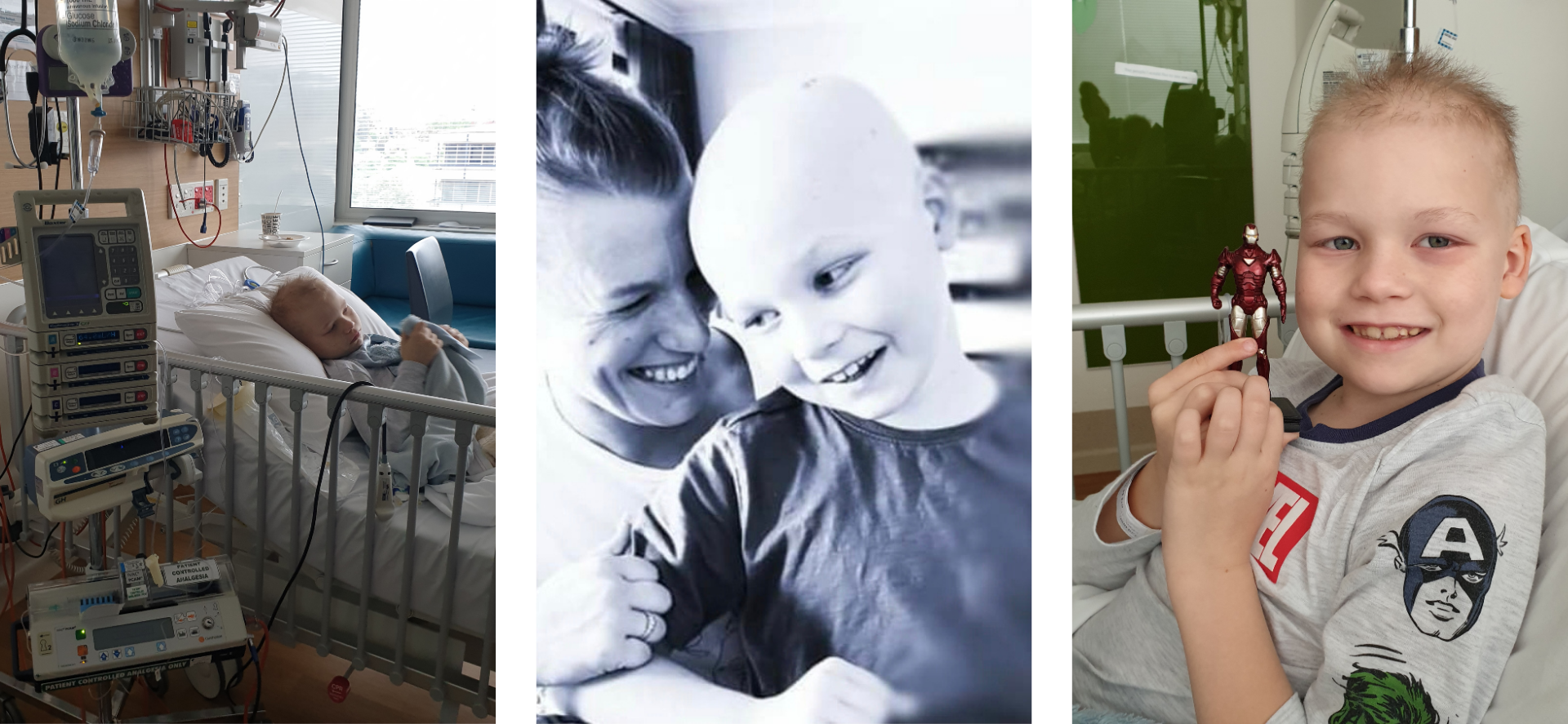
“Eamon had a rash. Just a tiny rash on his foot,” says Belinda, Eamon’s mum.
One morning in June 2020, when Eamon was seven years old, Belinda noticed that he was a bit sluggish and not his usual energetic self. Thinking it might be a virus, she called up the Health Direct nurses to get a second opinion about his symptoms.
“Within five minutes of calling, I had an ambulance on my doorstep. No matter how many times I told them we didn’t need it, that he had a cold, they sent an ambulance. When that ambulance got there, they sent for another ambulance and we got escorted quickly into the Women’s and Children’s Hospital because they were under the impression he had meningococcal.”
During the trip to the hospital, Eamon’s condition got worse.
“We didn’t know what was going on at that point. He just kept bruising. We couldn’t touch him. We got into the hospital, and it was probably one of the most traumatic parts of it was them trying to get the drip into him. They tried 11 times.”
Within an hour, a doctor was pulling her aside and telling her there were signs of leukaemia. Belinda was too shocked to even register what they were talking about, until two new doctors arrived.
“They said, “We’re Eamon’s oncology team,” and I said, “I don’t know why he needs an oncology team,” and they said, “Because he’s got high-risk B-cell leukaemia,” and I just went, “I don’t know what you’re talking about.”
The doctors told Belinda that Eamon’s blood had 96% leukaemic cells. Another week and they may not have been able to help him.
“We were only in there for about two hours by the time we were very quickly shipped up to the Michael Rice Centre, our new home for two years. Our entire world just stopped.”
Eamon was diagnosed just on the same week that the COVID-19 restrictions came into effect. The hospitals went into lockdown, and nobody could come visit. Each child on the ward could only have one person in the hospital at a time, so nobody had a support network.
Belinda called her closest friend, Kendall, to pick up her older son, Liam, from school. Liam and Eamon’s dad, Luke, had just come down with the flu, which meant that he couldn’t come into the hospital to relieve Belinda, and Liam couldn’t see Belinda or Eamon for the next three weeks.
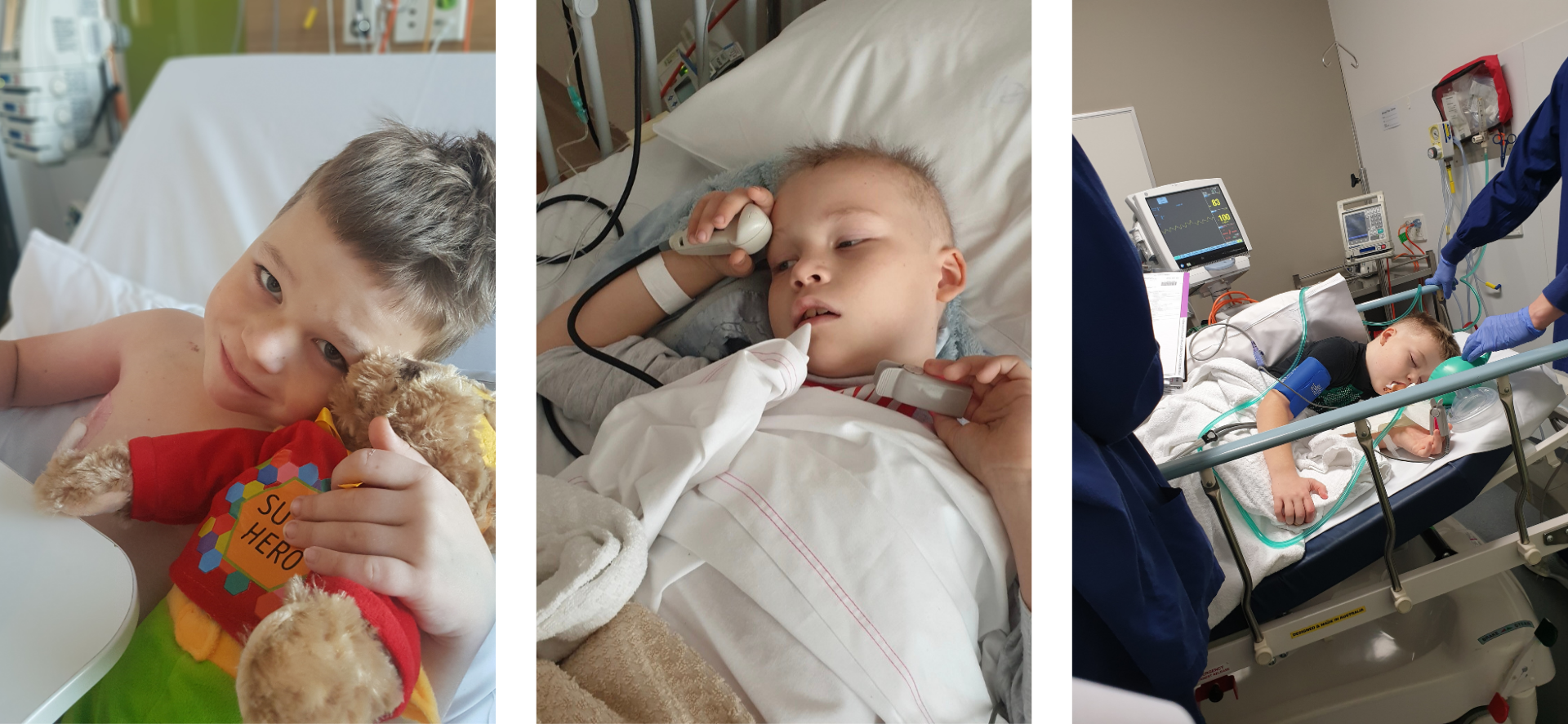
“About a week in, Eamon was in his bed, and he said to me, ‘Mum, am I going to die?’ I told him, ‘I’m going to do everything that I can to make sure that doesn’t happen, bud.’ The hardest part of the whole thing was trying to explain to your child that the doctors are going to do everything they can to keep you alive.”
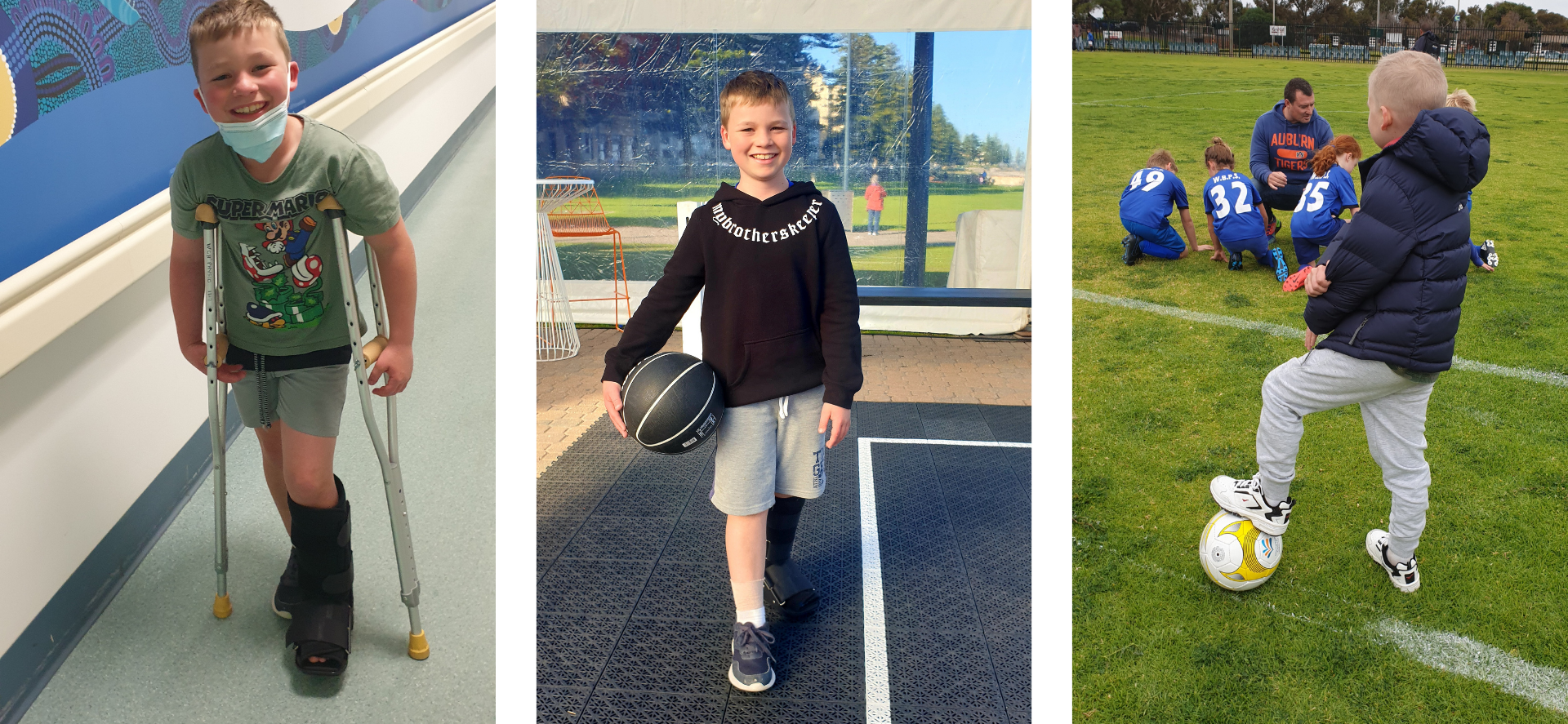
The treatment was hard on Eamon’s body. He broke both of his legs and fractured his hips when the chemo lowered his bone density too much to keep up with him. When he was eight, he had a lung infection that was so severe that they almost needed to remove one of his lungs.
By this stage, he was old enough to understand what was happening and all the things he wasn’t able to do. Kids his age were playing footy and basketball and running around all day.
“Every time he got excited about a sport, we had to tell him, ‘We’re sorry, you can’t do it.’ You have to take so much away from them, so much of the things that mean so much to them growing up, and you’re ripping it out of their hands. It’s heartbreaking to do, and it’s heartbreaking as a parent.”
Eamon’s brother, Liam’s life was also upended during Eamon’s treatment.
“Liam had to be strong for so long. He got shipped between houses in the middle of the night. I’d drop him off at Kendall’s house and say, ‘I’m sorry, you’ve got to go to Kendall’s. I’ve got to take Eamon to the hospital.’ He’d get up, he’d put Eamon’s shoes on, he’d pack Eamon’s bag. Then in the middle of the night, I’d drop him off on the footpath at the front of Kendall’s house, and she’d have him. It was just so disruptive for him.”
“He came home from school one day and said, ‘Nobody even asked how I am, Mum.’ He would get constant questions about how Eamon was and how his treatment was going. I told him, ‘Everybody loves you and everybody cares about you. It’s just the way it is at the moment. I can’t answer it for you, bud. It is what it is. We’re just trying to get through.’ It definitely affects the siblings a lot more than we think it does.
Belinda had been seeing her partner, Andrew, for about six months before Eamon was diagnosed.
“Andrew was amazing. I remember on my birthday, he wanted to take me out for dinner, but I couldn’t leave the ward because it was COVID-19. We had a sushi date in the stairwell because he wasn’t allowed to come into the ward, and I wasn’t supposed to go outside the hospital. He just became a rock and we just got stronger and stronger through it all.”
During treatment, when Eamon was allowed to go home for rest periods between cycles, they would drive up to Andrew’s house in the Adelaide Hills.
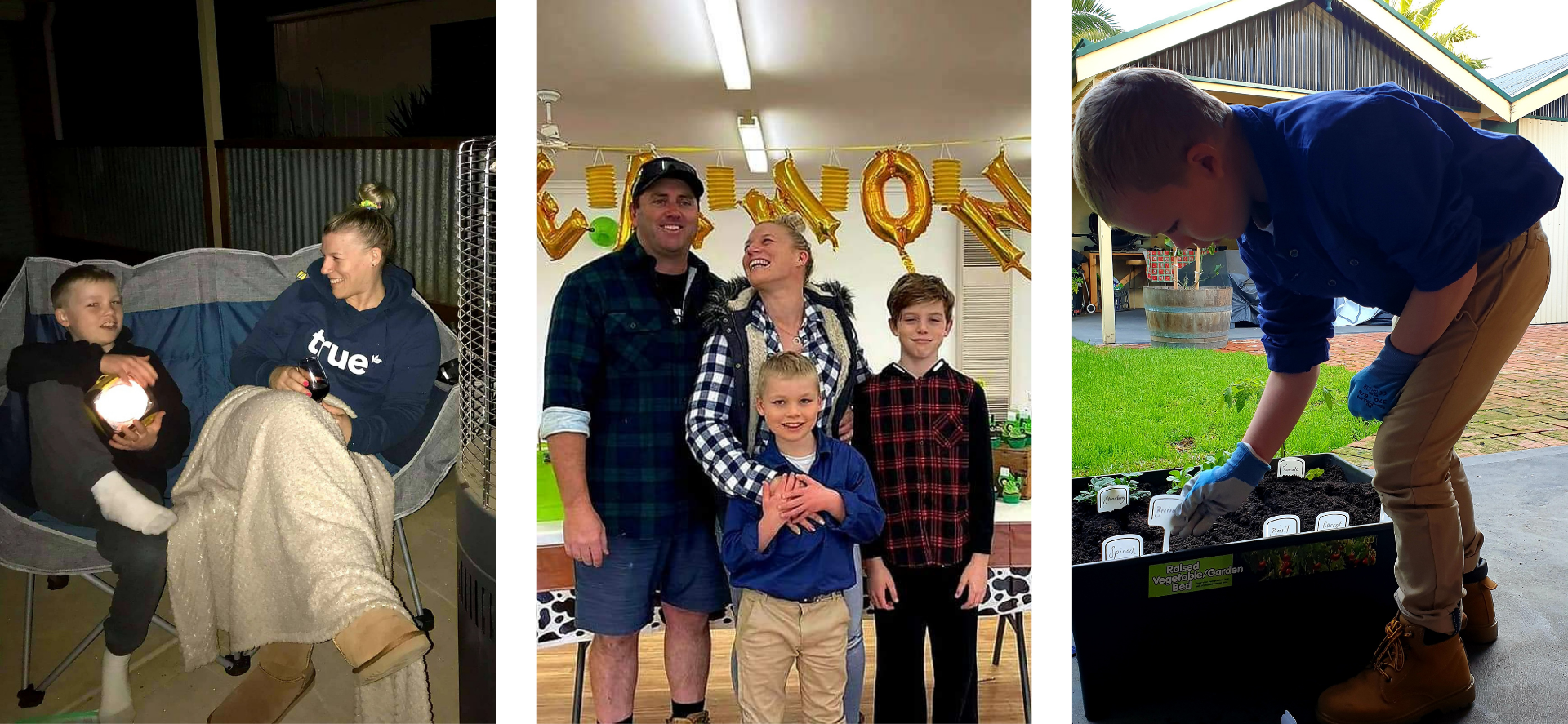
“It was a beautiful respite for Eamon, when he was well enough to be able to get out of the city and go and sit around a bonfire and not be concerned about germs or worry about what was going on in the real world down at the bottom of the hills.”
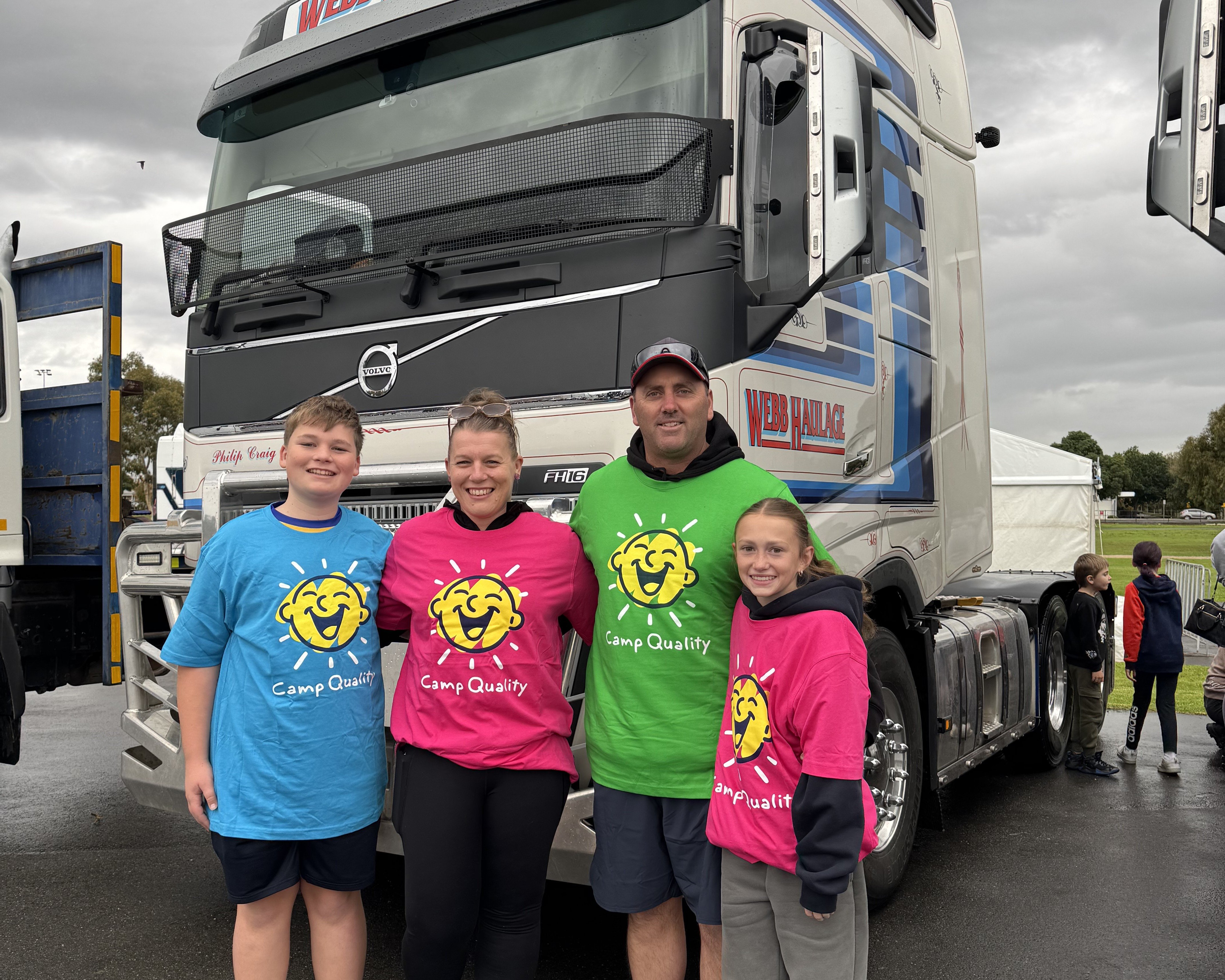
Andrew is a driver for a South Australian cargo and freight company, Webb Haulage. Eamon loved Andrew’s truck and going out for a drive with him.
During Eamon’s first three weeks in the hospital, Belinda researched like crazy, finding out all the support she could access.
“I don’t have family as such. My mum and my dad have both passed away. I’ve got my beautiful best friend, Kendall, who’s like my sister and she does everything for me, but I don’t really have a strong support network. The first thing I did when I was in there was try and find who’s going to help me and how I’m going to get help. I was at the point of becoming homeless. I couldn’t pay my rent. I couldn’t pay for anything, basically. I was really, really struggling.”
Belinda connected with many charities that supported children with cancer during Eamon’s treatment.
“I read about Camp Quality and the activities that they do that can bring smiles back to the kids’ faces. We’ve been to quite a few of the events now, and we love it.”
During treatment, Eamon’s primary school organised for the Camp Quality puppets to visit to teach the kids a bit about what he had been through. Eamon wasn’t well enough to attend, but Belinda went to see the show.
“Eamon’s school only had 200 kids, so it was quite a small school, and everybody knew Eamon. The puppets came to the school, and it was really, really good. I came down and watched it, and it was the most emotional thing because I learned so much from it as well. Although I’d been going through the treatment with Eamon, to hear it in another context, a context that kids understand, it enlightened me to a lot of education and a lot of different areas of it that I sort of hadn’t got my head around yet because I was still in the midst of it all.”
“I remember one girl in particular came up to Eamon when he first went back and had a school visit and she went up to him and she said, ‘My grandma had cancer and she died. Are you going to die?’ Eamon came and looked at her and went, “No, I’m good.’ It’s about educating the kids and making them understand. It was unreal. It was really powerful to watch the puppets and I know the kids absolutely loved it.”
When they went to their first Camp Quality Family Fun Day together, Eamon was a bit nervous.
“Eamon was very hesitant about going because he’s like, ‘Mum, I don’t want to be seen as the kid that had cancer and all that sort of stuff.’ After we went, he said, ‘I didn’t feel judged. I didn’t feel like I was being pointed out or anything like that,’ which he thought he was going to. He said he really loved it.”
Camp Quality offered the family a Retreat in Victor Harbour when Eamon was a year into treatment. He was still recovering from the lung infection, and the hospital was able to send a nurse to the holiday park to administer the medication he needed.
“The trip was amazing. That was one of the best times that Eamon had when we went down to Victor Harbour, because I am originally from there and Liam was born there. We’ve always seen it as home. Eamon was able to go on the water slides, which he couldn’t have done before because he broke his legs.”
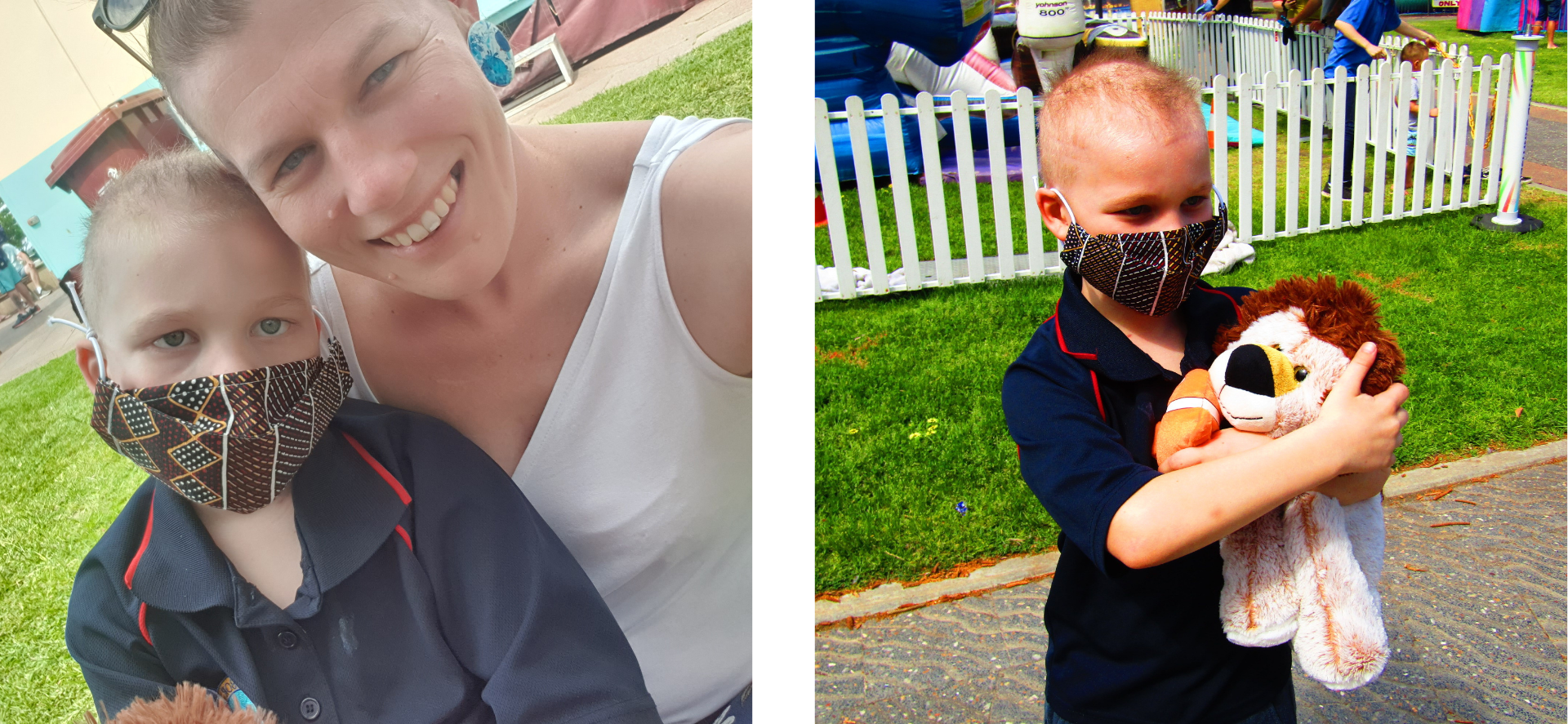
“Having that ability to get out of the hospital and go away from the city, get some fresh air, and do some normal kid things, it was incredible. You can’t do those sorts of things when they’re so sick normally, because you don’t know what the rooms are like and you don’t know about germs. Having a room where you know you’re safe was the best.”
“At the time, I couldn’t even afford to pay my rent, so getting Eamon to go on a holiday was just out of my league. I would never have been able to do anything like that, so having that option, it just blew my mind. I honestly couldn’t believe it. The generosity of it all to be able to go and do something like that with him, it just meant the world.”
A few years later, the family went on another Family Retreat to West Beach, with a nurse visiting them again to help administer medication to Eamon.
“It was like stepping away from reality because, at that point in our lives, our reality was awful. There was nothing nice about it. It was horrible. To be able to step away from it just for a weekend, just to say, ‘Today we’re normal. Today we’re going to be a normal family and we’re going to go on a holiday. And we’re going to go and eat some yummy food and we’re going to just chill out.’ You’ve got no idea how amazing that feels when simple things like that get taken away from you.”
After two and a half years of treatment, the doctors told Belinda that Eamon was in remission, but she wasn’t ready to believe them. The first year after he finished held the highest chance of relapse and she wasn’t ready to let go of the fear that she had been holding onto from day one.
“I remember it was the year after he had finished that I walked away from the hospital after his last major appointment and I just cried and I couldn’t stop crying. It was almost like the years of pain had hit me at that one point because now it was done, and now I didn’t need to be strong anymore. Because I was so strong for him through the whole process, it was now my time to just accept it and go, ‘Wow, my kid just had cancer and survived it.’ It was unbelievable.”
“I remember at the end I asked Eamon about it all he felt about all of it, and he said, ‘Mum, I’ve met some really cool people. I would never have met Dr Matt, and I would never have met all the nurses and I really like them.’ He saw the positives in such a terrible situation. If I asked him now, he wouldn’t even be able to tell me what form of leukaemia he had because he’s pushed it aside and he’s living life as best he possibly can now. He’s an absolute warrior, that kid.”
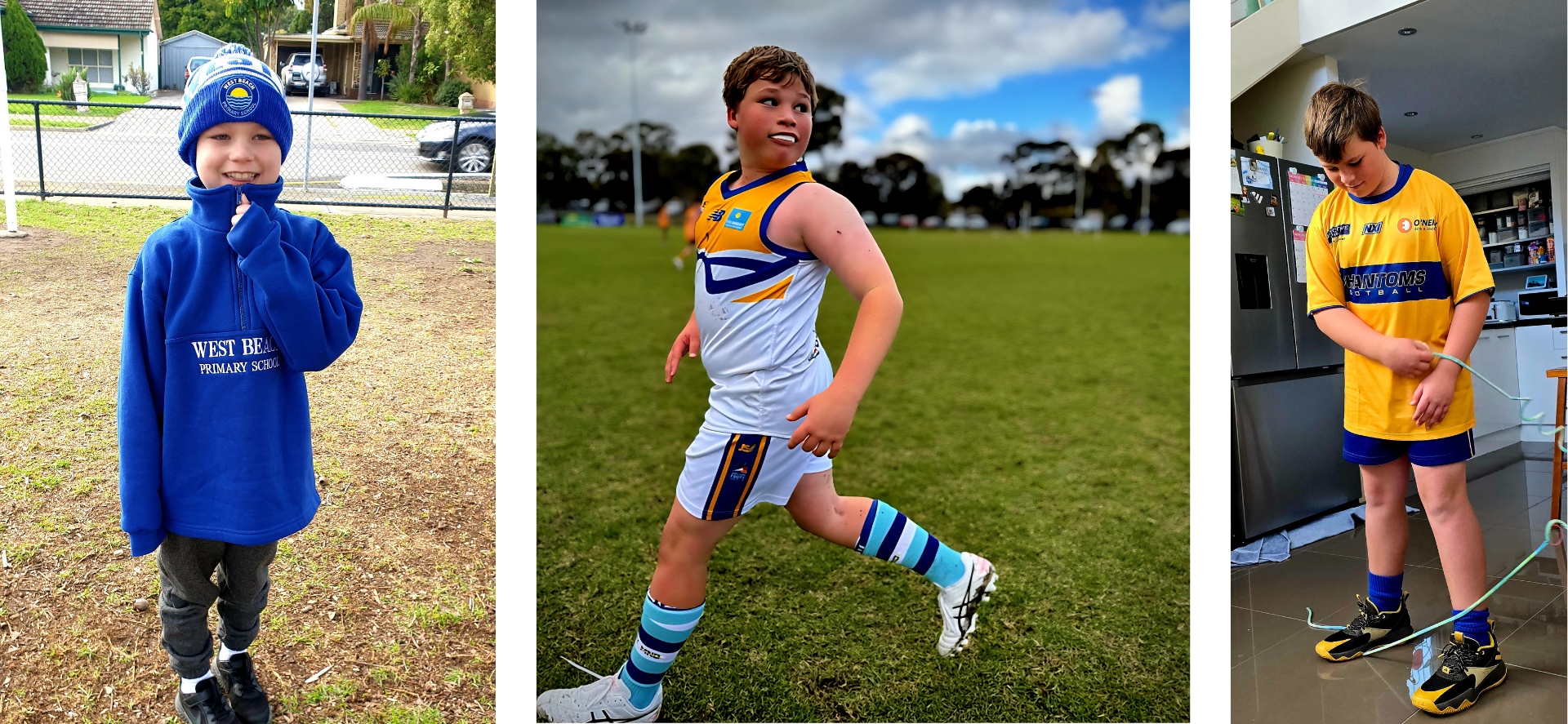
Eamon is now 12 years old. Despite his years in and out of the hospital, he kept up with his schoolwork and is now in year seven and loves playing footy.