OUR RECONCILIATION JOURNEY
Walking together
towards reconciliation
Our Reflect Reconciliation Action Plan sets out how we will listen, learn and take meaningful action alongside Aboriginal and Torres Strait Islander peoples.
OUR VISION
Our vision for reconciliation
Camp Quality’s vision is for an Australia where Aboriginal and Torres Strait Islander peoples, cultures, histories and knowledge are understood, respected and celebrated — and where every child and family affected by cancer can access support that is welcoming, culturally safe and responsive to their needs.
We want to listen, learn and build genuine relationships with First Nations peoples and communities. By walking together, we can help create more equitable cancer experiences and outcomes, while contributing to a future shaped by respect, connection and reconciliation.
WHY IT MATTERS
Why reconciliation matters for children and families affected by cancer
A cancer diagnosis affects the whole family. It can bring long periods away from home and community, disruption to education and everyday life, and lasting impacts on a child’s physical and emotional wellbeing.
Aboriginal and Torres Strait Islander peoples experience significant disparities in cancer diagnosis, access to care, and survival. We recognise that culturally safe support — grounded in connection to family, community, Country and culture — can make an important difference.
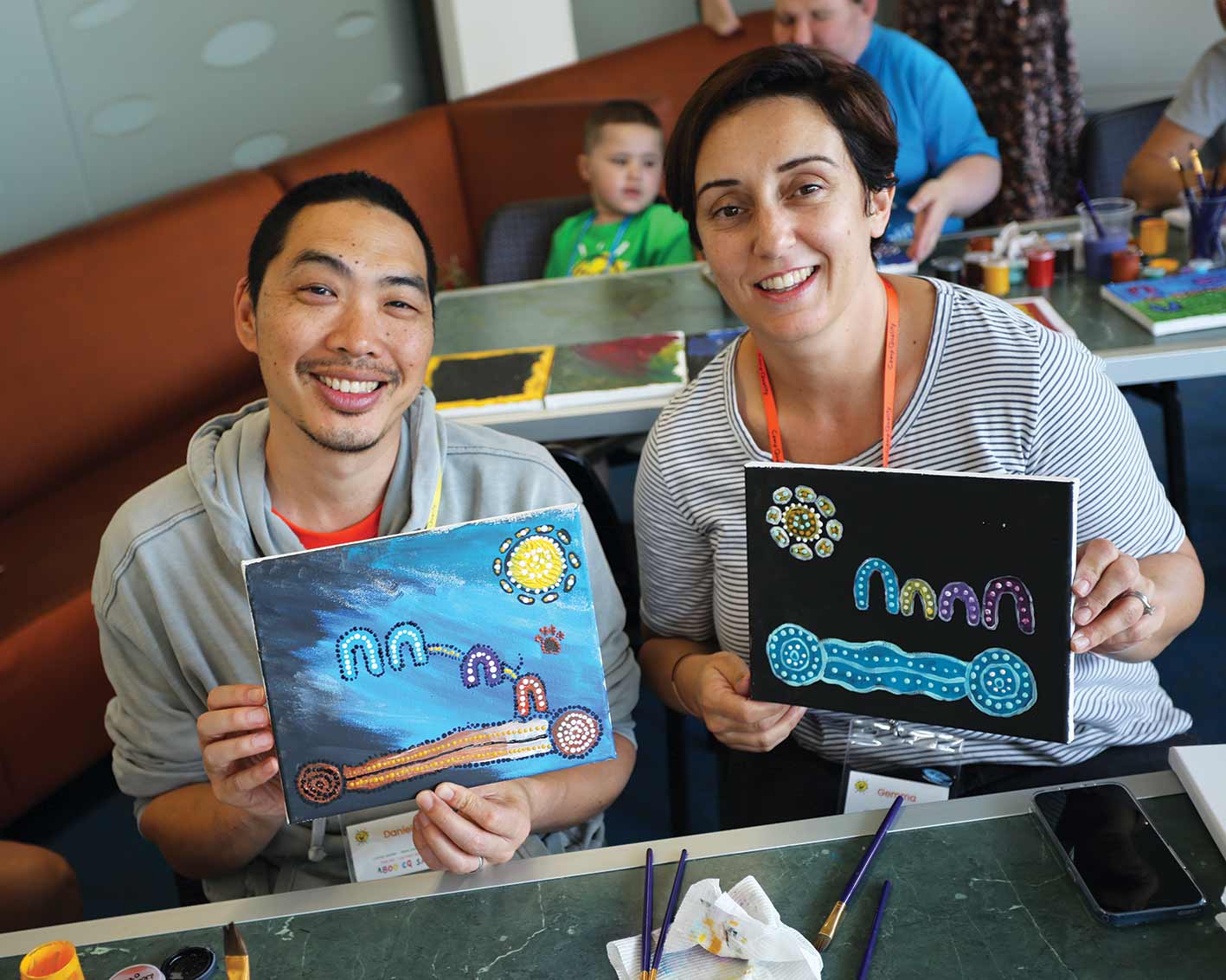
For Camp Quality, reconciliation means considering how we reach, welcome and support Aboriginal and Torres Strait Islander children and families across every part of their experience with us – in hospitals, schools and childcare settings, online, and through our camps and family programs. It means listening to First Nations voices and ensuring our programs and services are shaped by genuine understanding, respectful relationships and culturally informed practice.
WHY IT MATTERS
Why reconciliation matters for children and families affected by cancer
A cancer diagnosis affects the whole family. It can bring long periods away from home and community, disruption to education and everyday life, and lasting impacts on a child’s physical and emotional wellbeing.
Aboriginal and Torres Strait Islander peoples experience significant disparities in cancer diagnosis, access to care, and survival. We recognise that culturally safe support — grounded in connection to family, community, Country and culture — can make an important difference.
For Camp Quality, reconciliation means considering how we reach, welcome and support Aboriginal and Torres Strait Islander children and families across every part of their experience with us – in hospitals, schools and childcare settings, online, and through our camps and family programs. It means listening to First Nations voices and ensuring our programs and services are shaped by genuine understanding, respectful relationships and culturally informed practice.
THE STARTING POINT
What is a Reflect RAP?
A foundation for listening, learning and action.
A Reflect Reconciliation Action Plan is the foundation stage of Reconciliation Australia’s RAP framework. It helps an organisation understand its role in reconciliation, build relationships with Aboriginal and Torres Strait Islander peoples and establish the knowledge, systems and partnerships needed to take meaningful action.
For Camp Quality, this stage is about listening and learning, strengthening cultural understanding and turning our commitment into practical steps across our programs, people, partnerships and everyday ways of working. It creates a strong and accountable foundation for the next stage of our reconciliation journey.
THE STARTING POINT
What is a Reflect RAP?
A foundation for listening, learning and action.
A Reflect Reconciliation Action Plan is the foundation stage of Reconciliation Australia’s RAP framework. It helps an organisation understand its role in reconciliation, build relationships with Aboriginal and Torres Strait Islander peoples and establish the knowledge, systems and partnerships needed to take meaningful action.
For Camp Quality, this stage is about listening and learning, strengthening cultural understanding and turning our commitment into practical steps across our programs, people, partnerships and everyday ways of working. It creates a strong and accountable foundation for the next stage of our reconciliation journey.
July 2025 – February 2027
Read our Reflect Reconciliation Action Plan
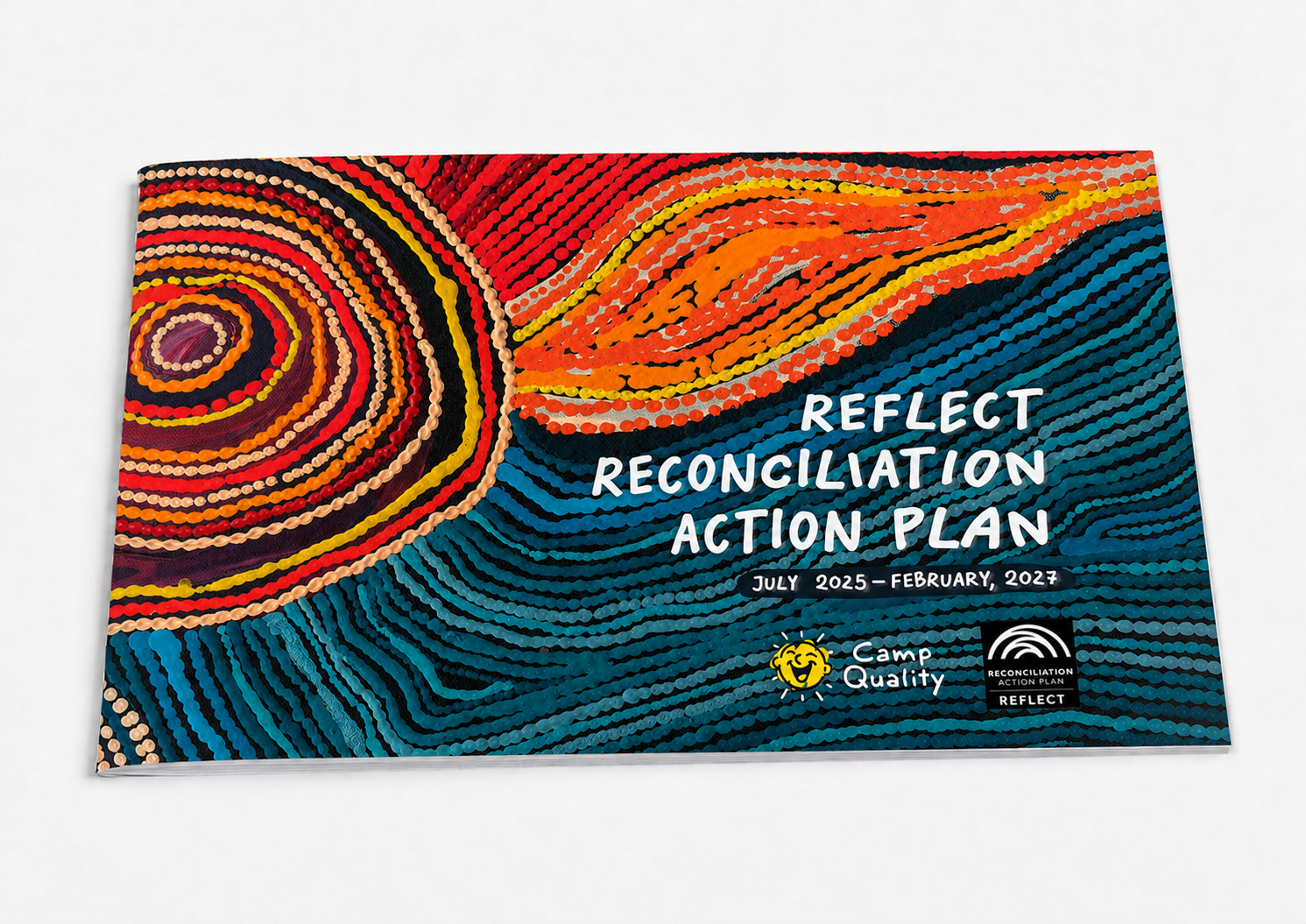
Explore the full plan, including the commitments guiding our work and the artwork that tells the story of this journey.
July 2025 – February 2027
Read our Reflect Reconciliation Action Plan
Explore the full plan, including the commitments guiding our work and the artwork that tells the story of this journey.
Our priorities
How we will put our
commitment into action
Our Reflect RAP sets out practical steps to build relationships and strengthen culturally safe support.
1. RELATIONSHIPS
Build genuine relationships and partnerships
We will strengthen relationships with Aboriginal and Torres Strait Islander peoples, communities and organisations, including deepening partnerships within the cancer sector. By listening and working collaboratively, we aim to better understand the needs of First Nations children and families and contribute to reducing the impact of cancer.
2. RESPECT
Provide culturally safe and respectful support
We will continue to build our understanding of Aboriginal and Torres Strait Islander cultures, histories, knowledge and rights. This includes strengthening cultural learning for our people, observing appropriate cultural protocols and progressively embedding culturally safe practices across our camps, family experiences, education programs and support services.
THE ARTWORK BEHIND OUR RAP
River of Light
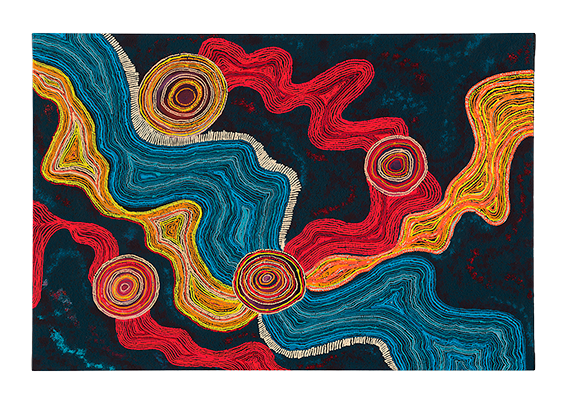
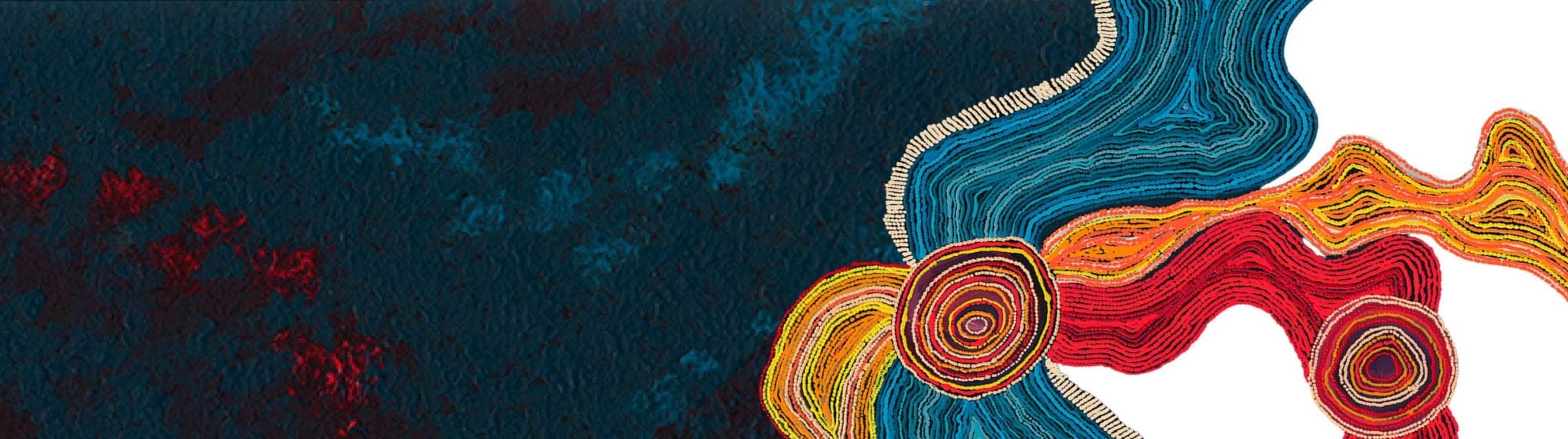
The artwork on our RAP and this page is River of Light: Camp Quality’s Journey of Healing and Connection by Natalie L. Simmons, a proud Wiradjuri/Wailwan woman.
Its flowing river represents knowledge and continuous learning. Around it, colour and gathering places speak to connection, joy and the shared journey towards reconciliation.
Artwork by Natalie L. Simmons.
THE ARTWORK BEHIND OUR RAP
River of Light
The artwork on our RAP and this page is River of Light: Camp Quality’s Journey of Healing and Connection by Natalie L. Simmons, a proud Wiradjuri/Wailwan woman.
Its flowing river represents knowledge and continuous learning. Around it, colour and gathering places speak to connection, joy and the shared journey towards reconciliation.
Artwork by Natalie L. Simmons.