Senya is a superstar




Camp Quality aims to provide accurate, helpful and trustworthy information for families. Read our publishing standards.
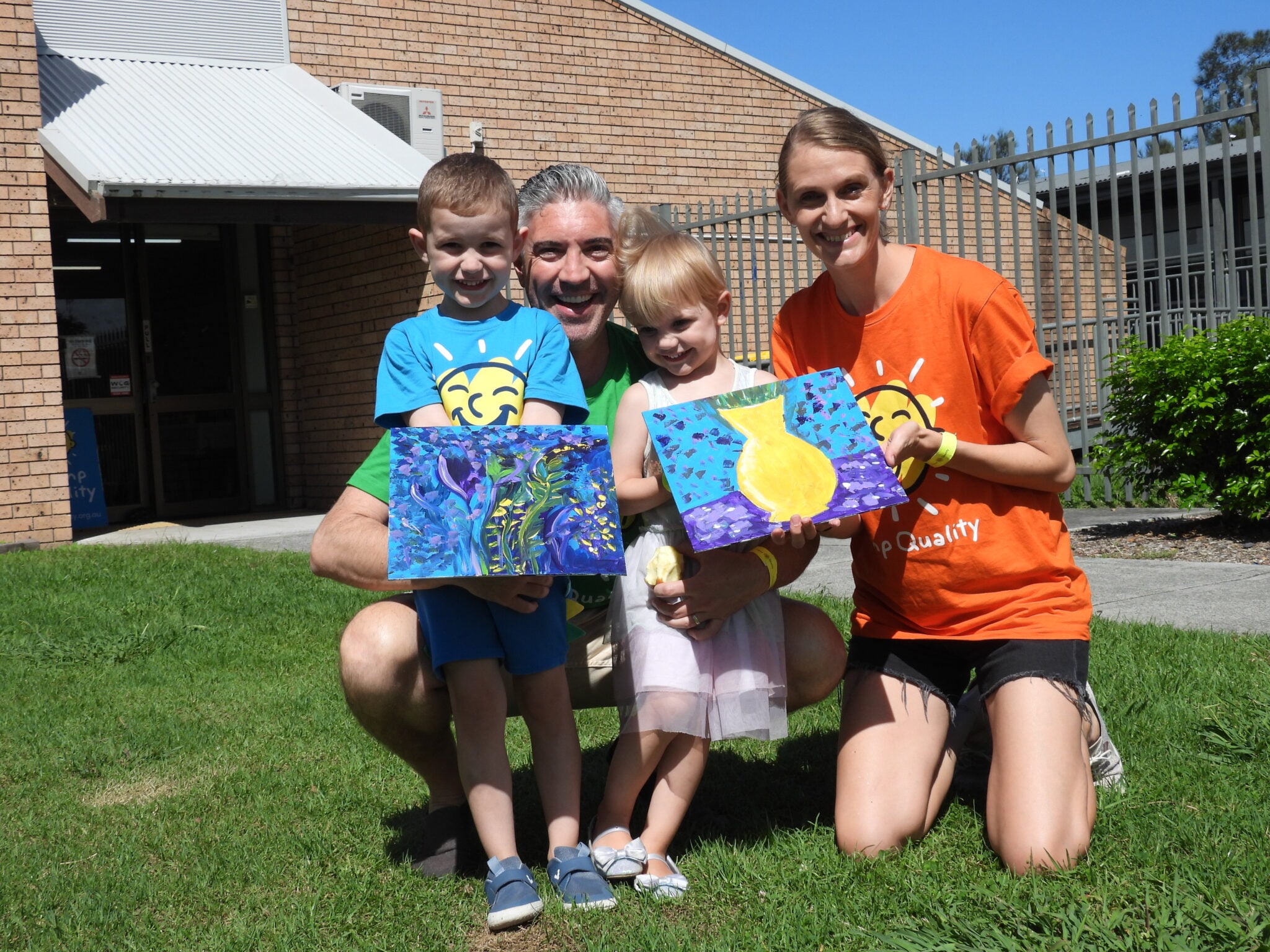
Lada and Chris met in Vietnam. Immediately, she knew they were going to be together. After living in the Czech Republic (Lada’s home country) for a period, they moved to Australia, Chris’s home country.
When it came time to have children, everything felt perfect. But while pregnant with Oliver, known as Ollie, Lada started to experience double vision. In the later stages of her pregnancy, she was diagnosed with a brain tumour.
While it wasn’t cancerous, it was inoperable, and after the birth she had to undergo a procedure called Gamma Knife, a form of radiation focused on a specific part of her brain.
“It was crippling. I would start having double vision out of nowhere. I wasn’t able to drive at all.”
Fortunately, the procedure worked and the tumour is no longer growing. During the long journey from diagnosis to treatment the uncertainty weighed heavily on the couple, and they were not sure what the future would look like.
Lada says it was all very strange and traumatic. But when baby Ollie was born, they were simply overjoyed. “We were in a bubble. We were so happy to have Ollie.” A few years later, baby Beau came along.
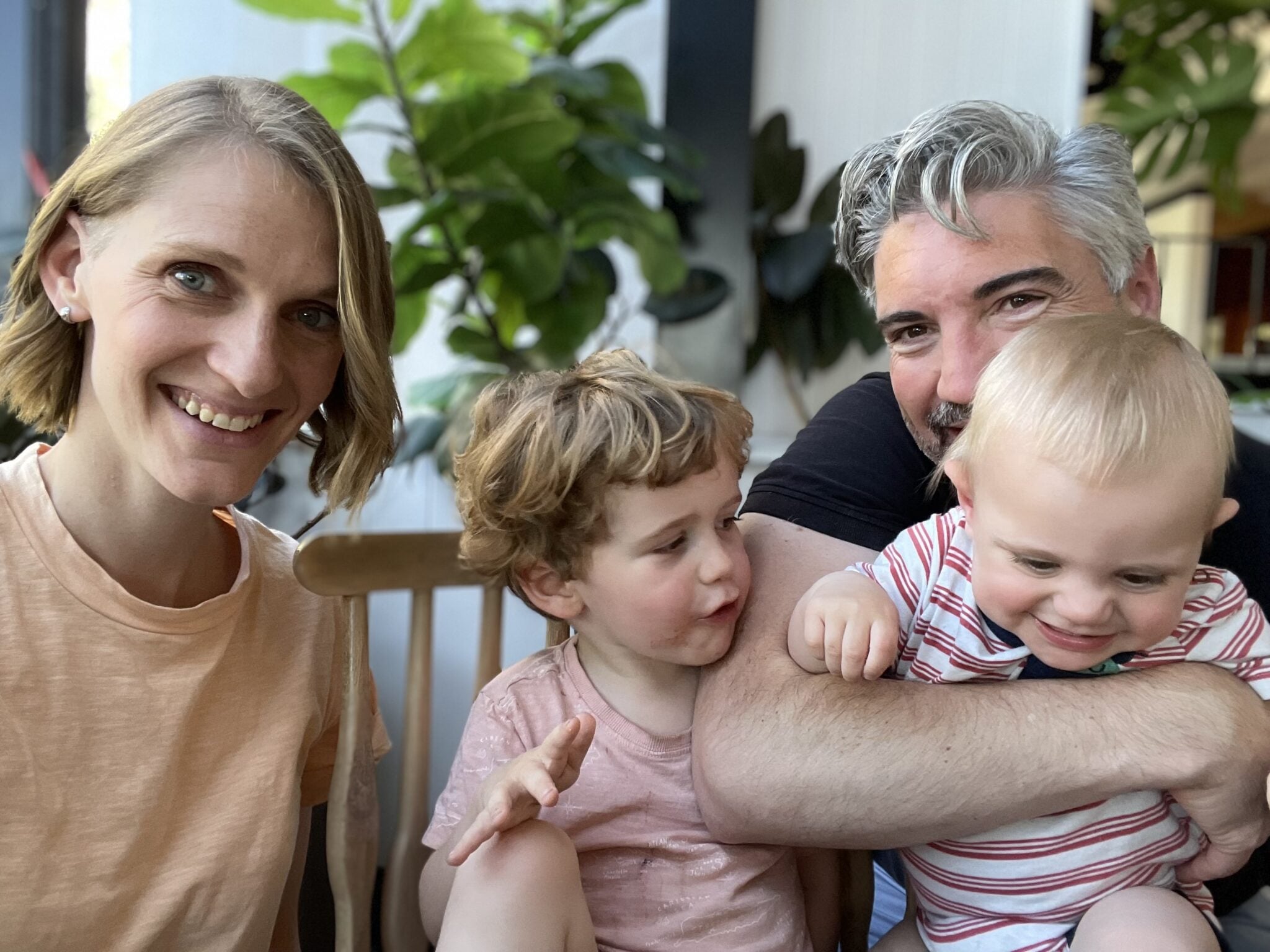
The family of four were very outdoorsy, active and always heading off to the beach. When Ollie was about three, he started having fevers out of nowhere. Initially, Lada and Chris put it down to a normal virus.
After a week of ongoing fevers, Lada and Chris felt that something was not quite right. They went to several GPs, who ran a series of standard tests, including a urine test and a blood sample. At first, nothing appeared abnormal.
After three weeks, they returned to see their regular GP, who happened to have a background in oncology. After hearing about the fevers and reviewing the blood test results, she told Lada and Chris to take Ollie straight to the hospital for further tests.
At first, doctors suspected perhaps a blood disorder or an autoimmune disease. This led to a bone marrow test. “Then they told us the diagnosis and we were shattered.” Ollie had been diagnosed with Pre-B acute lymphoblastic leukaemia.
“Until the last minute, I couldn’t believe it would be cancer. It just wasn’t a possibility in my mind at all. Then the diagnosis came and our world just fell apart. It was unbelievable.”
For Lada, none of it made sense. Ollie had always been a healthy little boy. Beau was still only just one year old. “It was just a nightmare. It’s one of the worst things that you can even possibly conceive in your brain that a child has cancer and it’s your child. It’s unbelievably hard news.”
Treatment for Ollie started straightaway. Lada had just launched her own business, so she had to put that on hold. Chris stopped working.
Ollie was mostly in the hospital, and when at home the family had to stop going out because Ollie was severely immunocompromised. They were isolated and unable to go to daycare, playgrounds, social events, shops, or other public places.
Chris and Lada had to redesign their whole lives overnight. “We were in fight or flight mode for months just trying to manage everything.”
For Ollie, treatment began with the insertion of a port in his chest, followed by a month of high dose steroids and chemotherapy – this was called induction phase. Steroids were awful, mood swings, incredible appetite and difficulty sleeping. He was incredibly resilient throughout the treatment. Ollie managed chemotherapy as well as he could, but at one point he was given anti-seizure medication for a month that was causing severe rages. “It was so hard, he was connected to immunotherapy, and his port was accessed and we were constantly worried he would pull it out.”
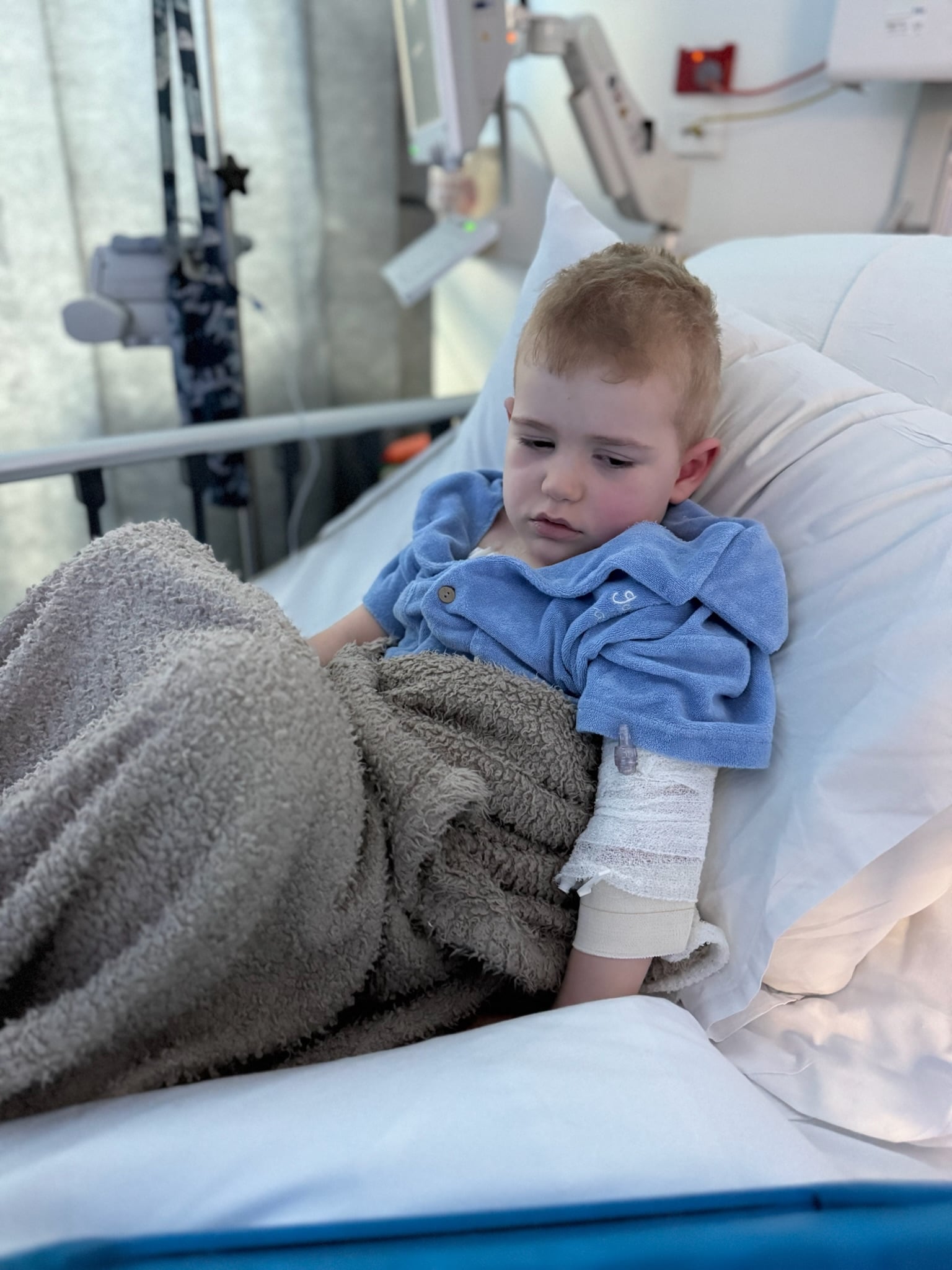
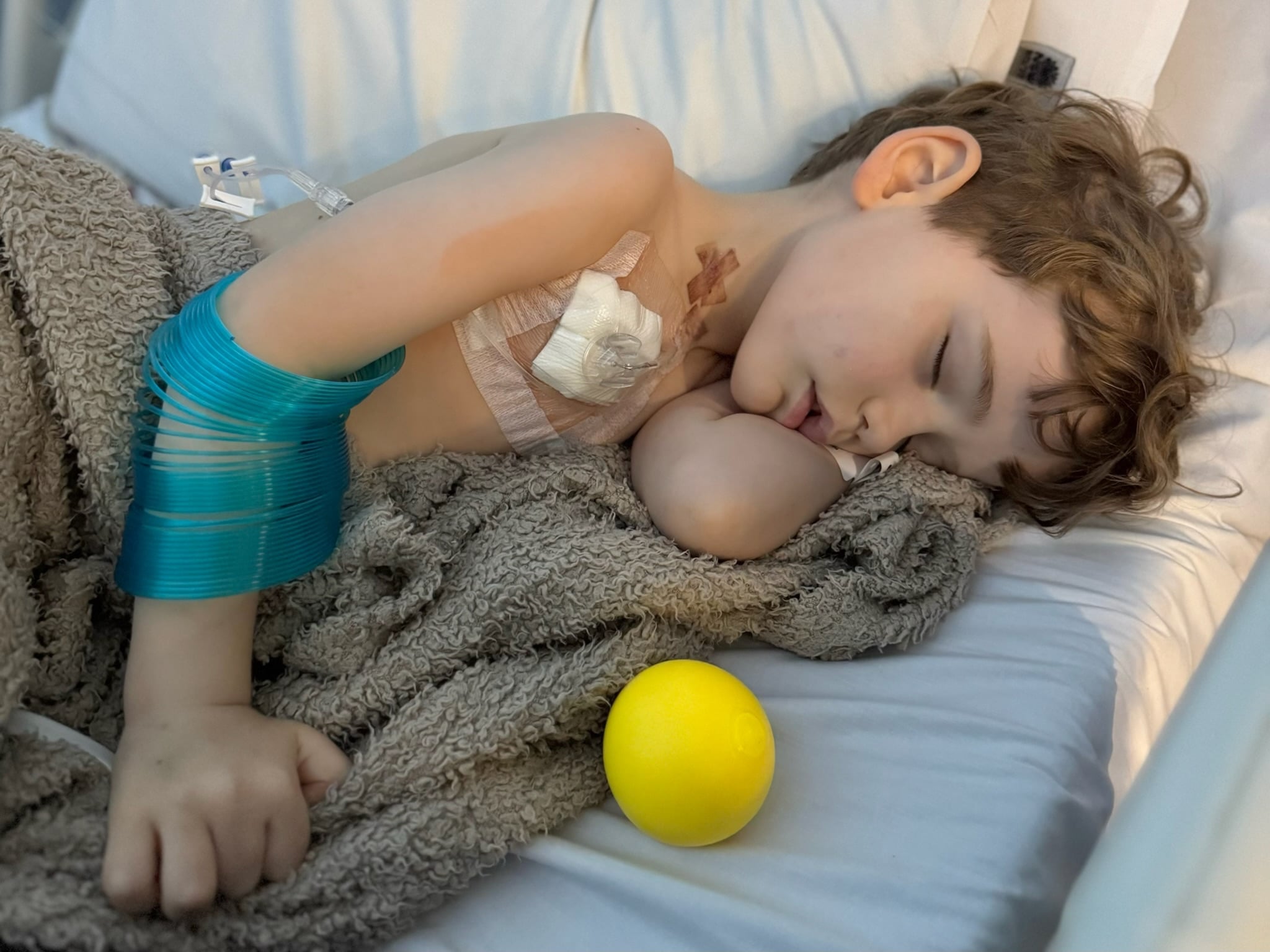
“The early months were so disturbing, we were putting poison in our little boy. Living in the hospital is so strange. Unless you’ve experienced it, you can’t understand it. It’s so hard to be there because you’re so focussed on being the best advocate for Ollie – remembering all the medicines, talking to nurses and doctors and calming Ollie down.”
“Then you must keep it together. During the night there’s so much noise and so many lights. There’s just this foldout bed to sleep on, and it is super tiring. Chris was in hospital with Ollie from the outset for the first few months, then we took shifts doing only three or four days in the hospital before swapping because we’d be completely exhausted and almost unable to function as adults who still have to take care of baby Beau.”
Lada said she and Chris were constantly overwhelmed. Ollie went through various types of IV chemotherapy, two courses of high dose steroids and two courses of immunotherapy, each lasting a month, adding up to a year of ‘intensive’ treatment. After that, Lada and Chris had to learn how to administer his medicines at home, but there were still long hospital stays every time he developed a fever or became unwell.
For Beau, the constant changes in routine led to a great deal of separation anxiety. He was so little and did not understand what was going on. He would try to play with his big brother but was often rebuffed because Ollie was not feeling well and was too sick or tired or sore to play.
“I was very concerned about their relationship. As Beau got older, he was able to play with him, so they started to play more together. We kept telling them, “You’re best friends. You’re brothers. You have each other.” Now they’re working it out.”
“Ollie has a very kind personality and is very inclusive. I think when he feels better, he’s quite a mature little boy for his age.”
While Ollie was on the ward, the Camp Quality puppets would visit to make him laugh. “The days in the hospital are long for parents and kids. So having something as silly as the puppets come in and make jokes or play games, was just so much fun for everyone. Even as a parent, it was wonderful. I’m so grateful we had that and all the other wonderful support staff at the hospital.”
Lada learned about Camp Quality after seeing a poster in the hospital kitchen. “I signed up and straight away we were getting these fantastic emails about offers of going away somewhere, but it was at the beginning of treatment and there’s no way we could ever go on holiday then. It was just so overwhelming. We were so scared as well at the beginning.”
But after a year and once Ollie entered maintenance chemotherapy and was doing well enough, Lada thought it might be a good time to join a program, and the family went on a Family Retreat.
“It was just unconceivable, really, for that whole time of intensive treatment. We were stressed and we were not working and didn’t have money. However when we got to the maintenance we were like, ‘You know what? Let’s just book it.’”
Lada says there are no words to describe how it felt when they arrived. They were so excited.
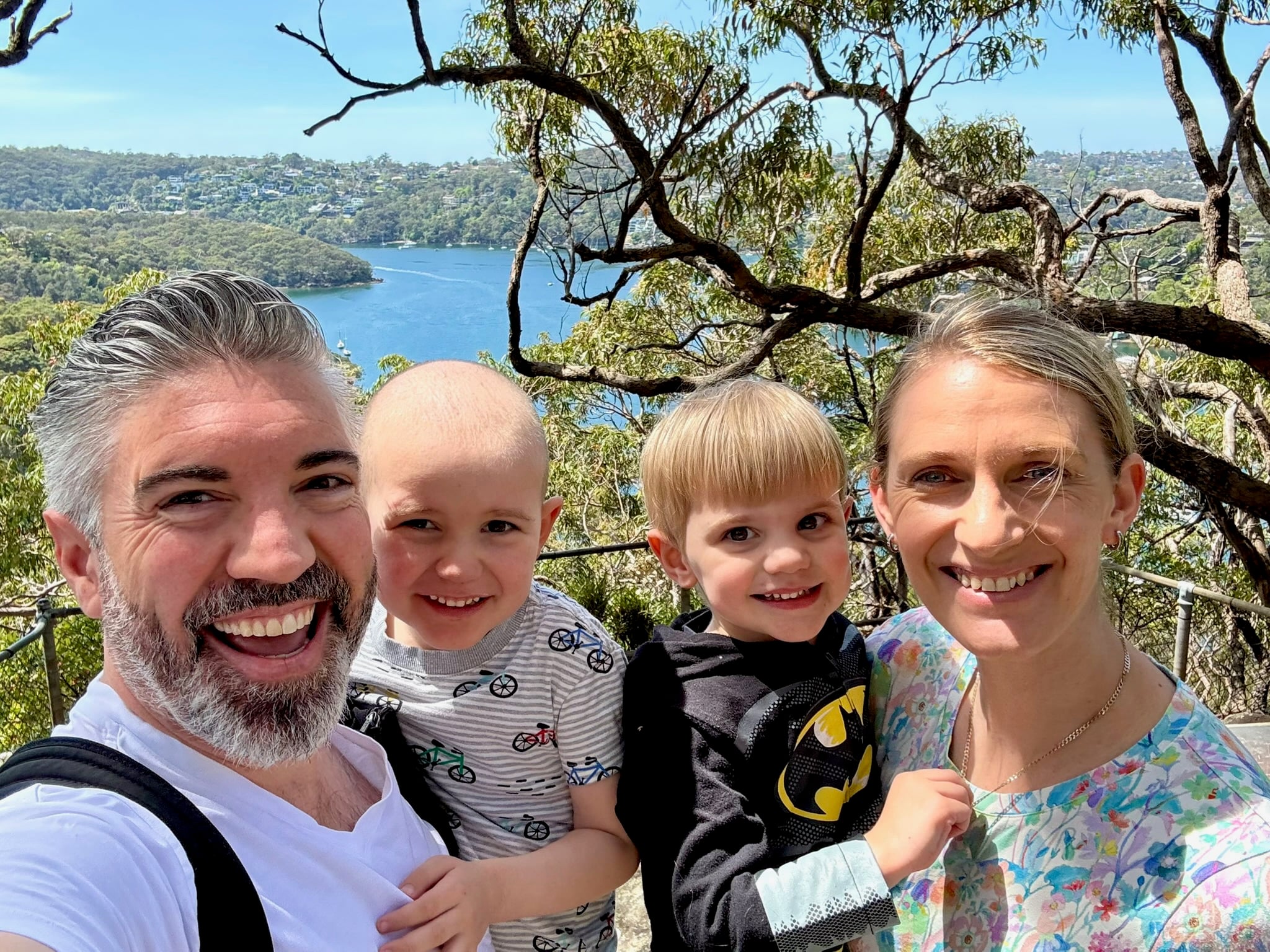
“The boys were running around when we arrived there, screaming, ‘This is the best day ever.’ They loved the ‘holiday house’ as they called it.”
They spent the weekend swimming, floating and spending long days by the pool together. “We’re just so happy. We had the best time and other than Ollie being a bit sick from the chemo, nothing dramatic happened. It was pure fun. We were using all those wonderful resources. For Chris and I, even just being in a different environment and on holidays, it was so fantastic. I think it will be signed in our brains for one of the best holidays of our life ever, just because of the circumstances and how happy everyone was.”
More recently, they went away on a Family Camp. Lada was not completely sure what it involved, but she signed up straight away. Once they were confirmed to attend, they were thrilled to discover the weekend would be packed with fun activities. One of them was paddle boarding, something the family loved and continued doing after the camp.
“The paddle boarding on the first day, we were just having the best time. It was fantastic. I think, again, the energy of everyone was so lovely, and that includes all of the volunteers from Camp Quality and the families.”
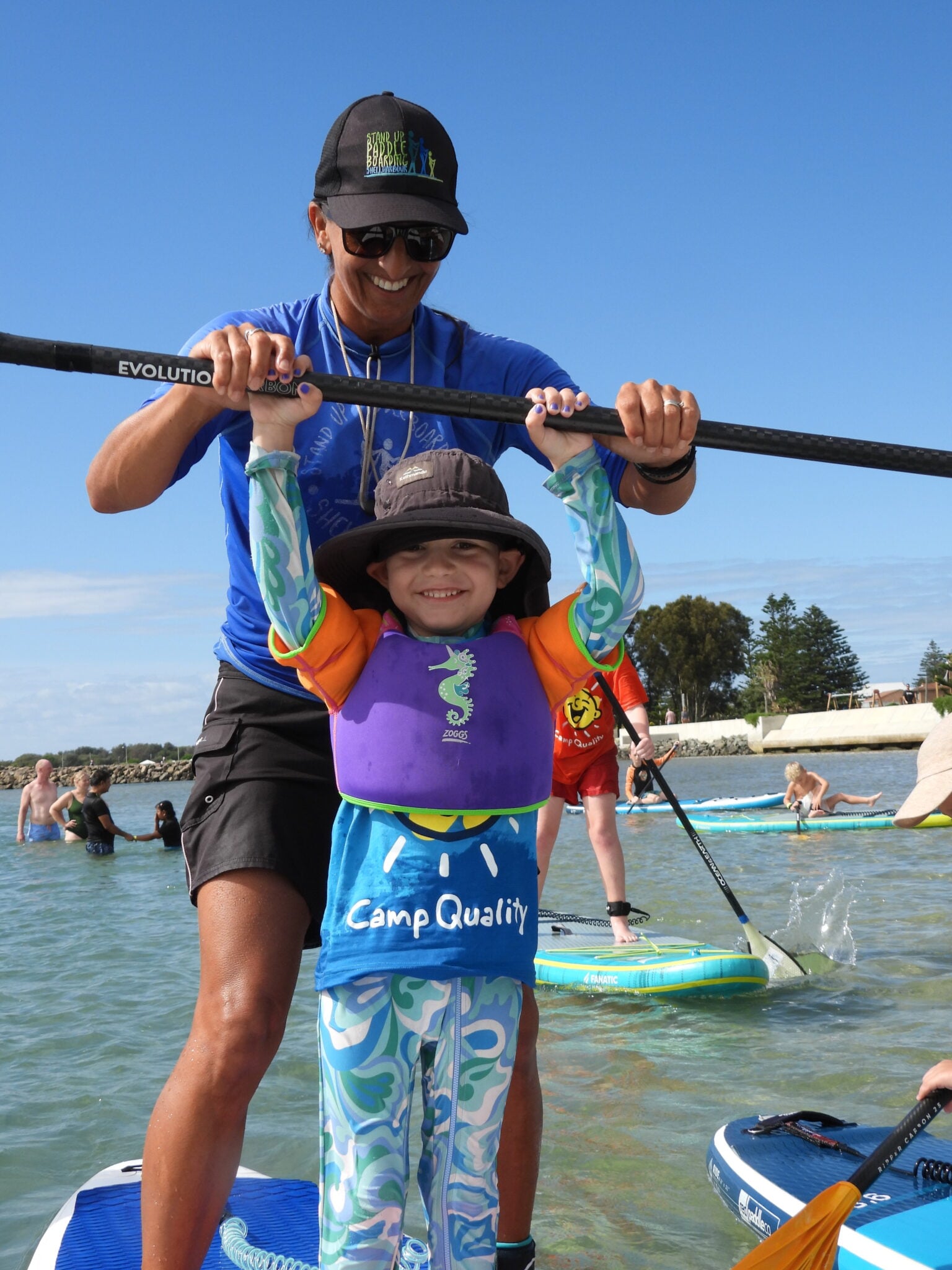
“When we arrived and I saw so many volunteers and people. I was thinking, “Wow, this is incredible. “We were literally blown away by it. It makes me quite emotional because I see so much goodness in those people, and it makes you want to be like that, do some other good things for other people as well.”
Later in the day, Lada and Chris were able to have dinner with the other parents while volunteers cared for the children. Although they were initially apprehensive about leaving the boys, after spending time with the volunteers they could see how happy and well cared for the children were.
“It was much easier to leave them. Then they saw that big slide when we dropped them off, and they ran to it as we said bye and went for the planned dinner.”
“The dinner was just very special and so good for us to be there. We were able to chat with other adults who went through the same things or even harder things in some cases. It was just so nice because there was this shared understanding of the same jokes for example about hospital food and hospital life. Everyone was laughing, whereas people in the real world don’t understand these jokes or don’t know what to say. Whereas this was such a safe group to talk to and just so nice. We really loved that dinner.”
Lada says these experiences have been incredibly important in helping her process everything and begin to heal. She explains that being with people who truly understand what their family has been through was deeply cathartic.
Ollie is now in maintenance chemotherapy and takes his treatment in tablet form every day. He still has monthly hospital visits for immunoglobulin transfusions until his body starts to create his own antibodies. Ollie also started school this year. While he is not there full-time just yet, he absolutely loves it and loves learning.
“We were really worried about it because we were not sure how he was going to handle it. When he started to go to preschool, just before he went to school, he was really having severe separation anxiety. It’s just very hard to get him there and keep him there. So I was very worried about how it was going to work with school, but he loves school.”
Ollie will continue maintenance chemotherapy until October and the completion the full cycle of two years long treatment. By then he will hopefully be healthy enough to be revaccinated and considered well. He will then be monitored throughout his life for any long-term impacts of the chemotherapy treatment or signs of the cancer returning.
“Now, he’s a different child. He’s much more himself, he has more energy, and he’s regaining his strength. He’s just doing better and better. It’s amazing to see, and it’s so beautiful.”