Hannah’s story: How the puppets brought joy to hospital and school




Camp Quality aims to provide accurate, helpful and trustworthy information for families. Read our publishing standards.
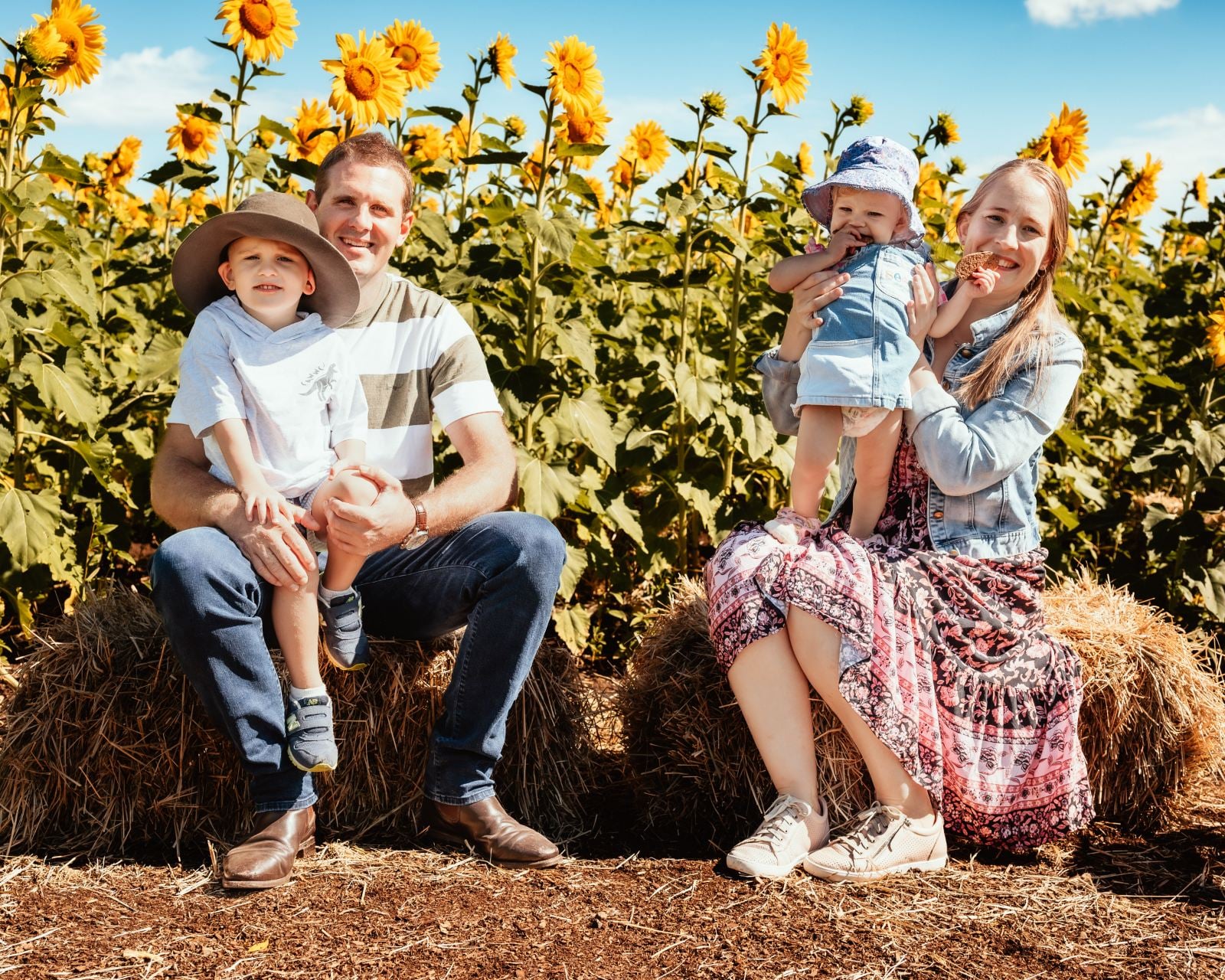
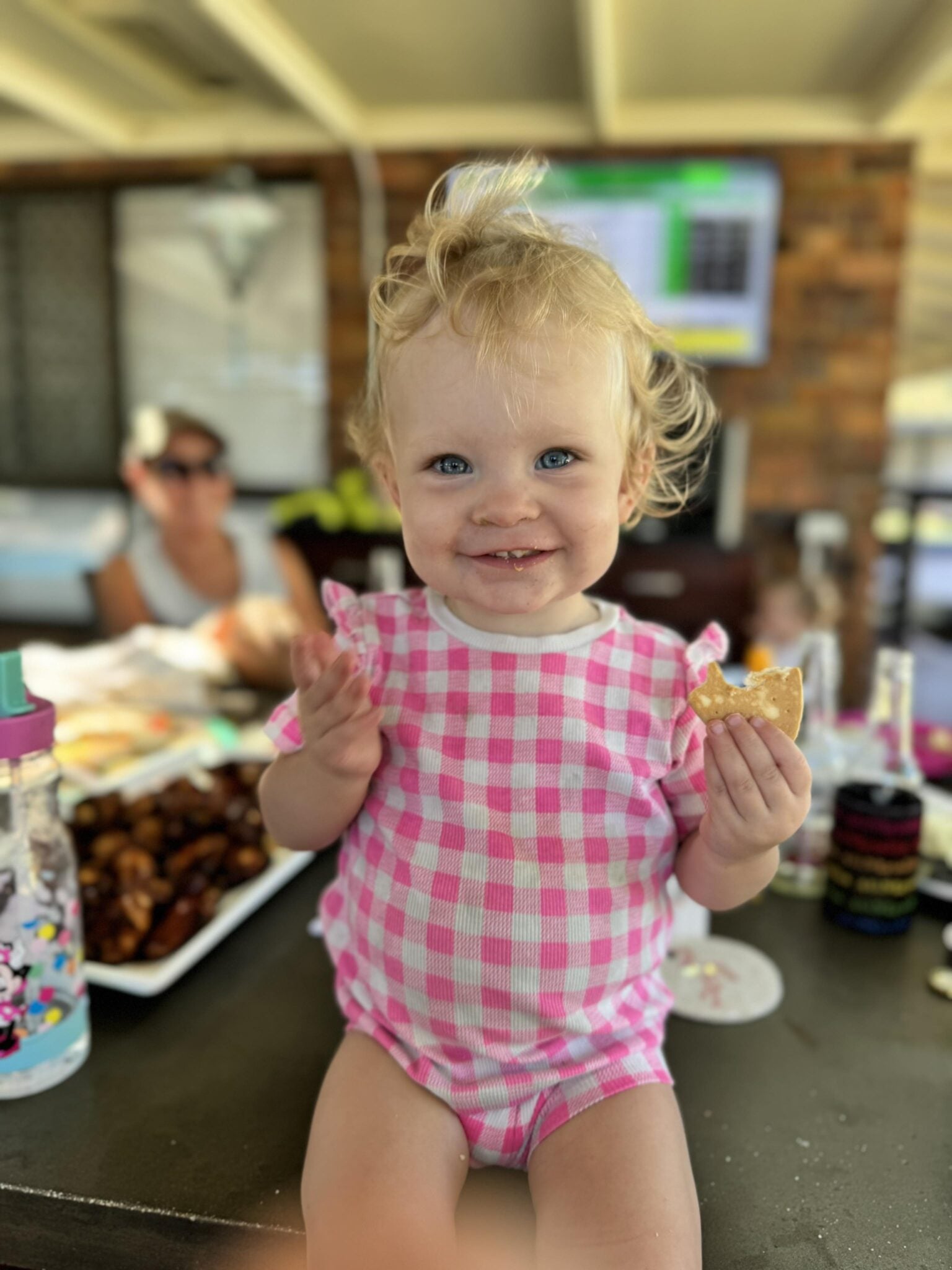
Before cancer, life for Peyton Scott and her family was full of fun, adventure and time together.
At 18 months old, Peyton loved playing with her big brother Oakley and running around with her parents, Emma and Luke. The family had just bought a new four-wheel drive and camper trailer, with big plans to travel around Australia together.
Then Peyton became unwell.
At first, Emma and Luke were told Peyton had a virus. Emma pushed for a chest X-ray, but the hospital insisted it was RSV and sent them home.
Five days later, Peyton returned to daycare. After only a few hours at work, Emma received a call saying Peyton still wasn’t well enough and needed to be picked up. Luke collected her and met Emma at Queensland Children’s Hospital.
While they were in the emergency department, Emma noticed more and more doctors coming into the room.
“All of a sudden there’s like a non-clinical support worker in our room. I said, ‘What are you doing here?’. She goes, ‘I’m here for you guys,’ I said, ‘Why though?’.”
That was when Emma began to feel like something was wrong. She turned to Luke and told him she had a bad feeling. Peyton was taken for a cannula, and doctors prepared to take her for a CT scan.
Emma asked what they had seen.
“I know you do not scan little kids for no reason. The nurse she looked at me and she said, ‘Thank God you brought her in because she would’ve been in here within 24 hours, just in a different kind of way,’ and she turned the screen around and said, ‘because there’s a big mass on her chest.”
When an oncologist arrived, Emma knew it was cancer. Her grandfather had recently been diagnosed, and she recognised what oncology meant.
“I just burst into tears and Luke’s like, ‘What’s oncology? I said, ‘That’s cancer.’ They got her set up in the resuscitation in ED, and then the two oncologists came, started talking about lymphoma and leukemia.”
Peyton was then diagnosed with T-cell leukaemia.
“I remember saying, ‘I can’t be in this room,’ and I left and walked outside to call my mum and I said, ‘You need to get here now.’ She goes, ‘Why?’ And I said, ‘Because I’m looking at the oncology team.’”
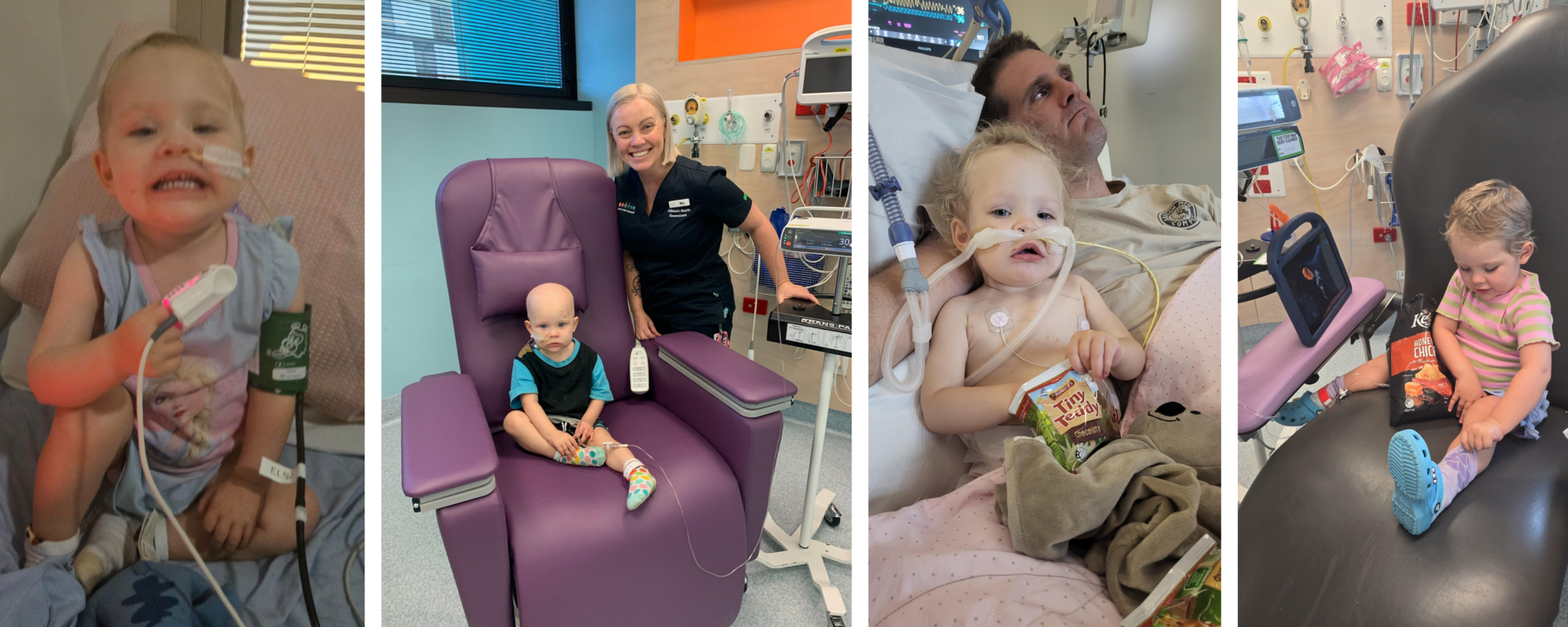
“Three hours later we were in the Paediatric Intensive Care Unit (PICU). She had a huge tumour in her chest, her airway was almost closed, and her lungs had collapsed. She had all this fluid around her heart.”
Emma and Luke were told the next 48 hours were critical. That night, Peyton had a feeding tube inserted, along with a catheter and cannula, all while she was awake because she was too unstable to go under general anaesthetic.
At 4am, Emma and Luke were called back to PICU, and then again at 7.30am. To make things even harder, Peyton’s brother Oakley was due to have scheduled surgery the day after her diagnosis. Emma stayed with Peyton, while Luke went to care for Oakley.
Peyton began chemotherapy the next day from PICU. Emma was given a roadmap of what the next few months would involve and what treatment Peyton would need.
After five days in PICU and another five days on the oncology ward, the family was finally able to go home. But before they left, a cancer nurse gave Emma instructions. It was a list of everything their family could no longer do.
“Here’s all the things you cannot do now with life. These are the places you can’t go to. This is what you need to do. This is what it’s going to look like. Do you have a dog? Don’t get a dog if you don’t have one. You can’t have flowers in the house. There’s no more daycare. There are no more birthday parties. Don’t see anyone unless you really must.”
Nurses came every few days to give Peyton her medicine, before Emma eventually had to learn how to do it herself. She also had to learn how to give Peyton chemotherapy injections at home.
“It was very confronting because she just had a lumbar puncture and then on that day is the day you find out you got to start injecting your kid. I can take needles, but I can’t even look at blood. I had to learn how to inject her, and this one mum said to me, ‘Welcome to being an oncology mum.’ I just burst into tears.”
Emma says cancer treatment takes over every part of family life. The ability to make plans disappears, because you never know when you might need to go back to hospital.
“It’s a wild ride, and I take my hat off to everyone who’s in it because there is always someone who has it worse. As much as I kind of go, “Why us?” I’m just like, “We actually got pretty lucky with the diagnosis she got and how well she’s doing.”
Life changed for Oakley too. He stopped daycare straight away and did not go back for at least a month, only returning occasionally after that. Emma, who had just started a new job, had to leave work and stay with Peyton in hospital almost full-time.
“Luke would come and go to help with Oaky because he was fine for the first few days and then when he didn’t see us or hadn’t been home for a good week, we really started to see he was struggling. Mentally, Oaky suffered a lot and just he was not coping at all.”
Peyton was too little to understand what was happening, but she also struggled.
“Every time a doctor would come near her, ‘help, help, help.’ It was awful.”
During Peyton’s treatment, Emma’s grandfather was also diagnosed with leukaemia. Sadly, he passed away not long after.
Despite everything she was going through, Peyton’s personality still shone through. She loves musicals, and when she started treatment, her talking really took off.
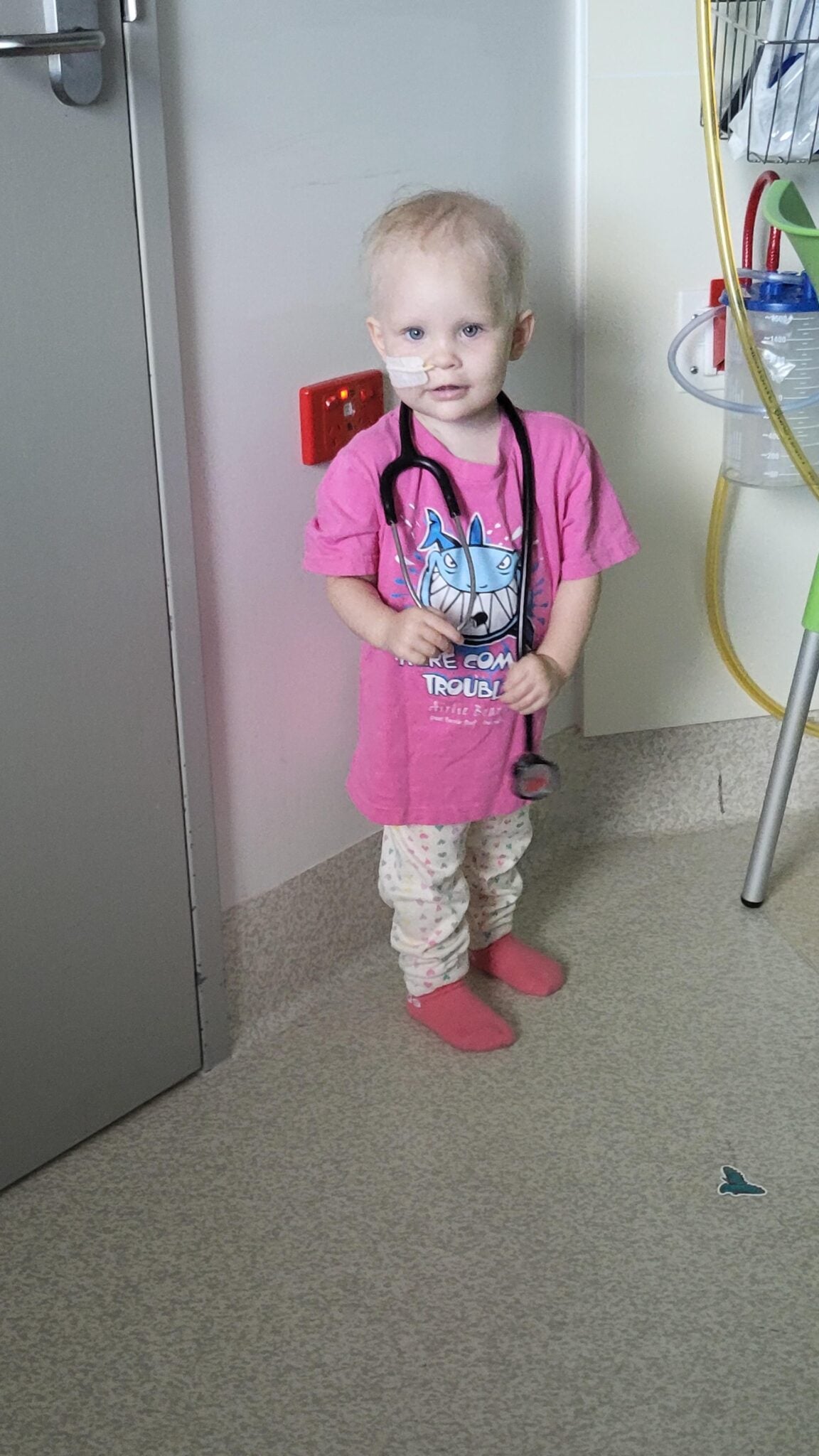
“She was singing all the Frozen songs. We went in for chemo and she was hooked up, and getting the chemo through her port, but she wanted to ride the little bike around the ward.”
Peyton would go looking for her favourite nurses, even during treatment.
“I’m just like, ‘how is this little kid just full of life literally where she’s getting all this poison into her?’. She did very well, and then we hit maintenance and has all just kind of gone a bit backwards.”
Emma says that at the beginning of a diagnosis, people rally around you.
“Our front door camera would ping constantly while we were in hospital with people bringing food and groceries. The kindergarten even raised money to buy us some food vouchers. But then people realised how hard this was going to be, how long a road was, and they didn’t know what to say or how to react. So they back away and you sort of feel forgotten.”
Becoming a cancer mum was emotionally overwhelming.
“You meet all these other families in the same position but sort of think ‘I’m not ready for this. It’s like a door, crossing over to the other side and you’re on the edge of this cliff, and you don’t want to do it because you still don’t believe it’s happening to you.”
Emma also speaks about the isolation that comes with a cancer diagnosis.
“You’re not even allowed to leave the room to get a coffee because your child is so sick that you can’t risk bringing back any germs.”
Peyton has since moved into maintenance chemotherapy. While Emma is grateful they are out of hospital more often; maintenance has brought its own challenges.
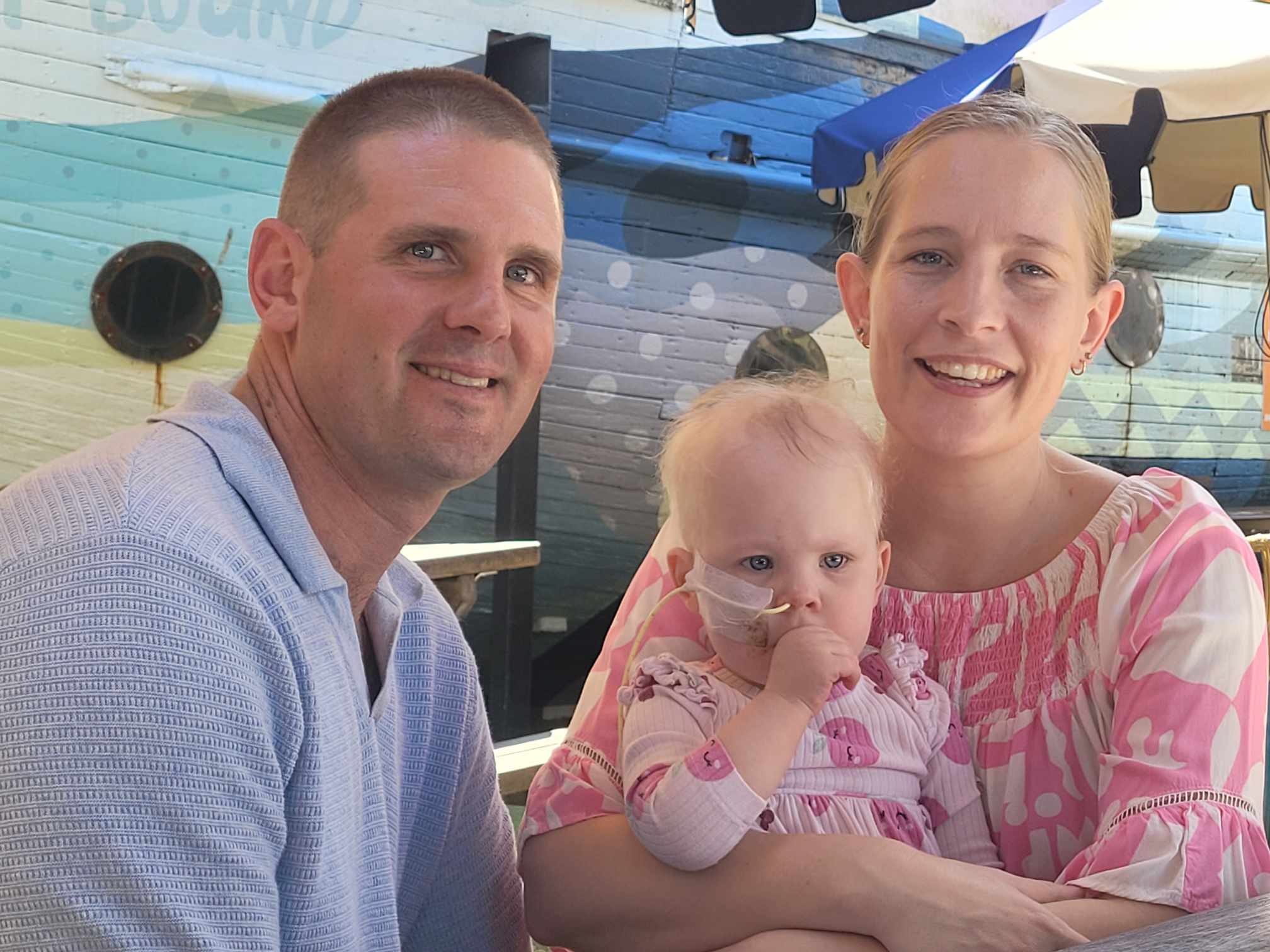
“Now it’s getting low blood sugar. She’s been in hospital every week for the past month because she keeps having hyperglycemia attacks, and the first time it happened, I called QAS because she was unresponsive.”
Peyton and her family are counting down the days until she finishes treatment.
“Hopefully she’ll be a normal kid, but you don’t realise how lucky you are until you’re on the cancer ward.”
Camp Quality became part of Peyton’s story early on. Her family registered at the start of diagnosis, and Peyton met the Camp Quality Puppets on the ward.
“She loved the puppets. They were just great.”
It took a little while before Emma felt ready for the family to go away on a Family Retreat. She wanted to wait until Peyton was in a better place.
When they were finally booked in, Emma told the kids they were going on a holiday. Oakley was so excited that he did not sleep.
As soon as they arrived, Peyton could not open the car door fast enough.
“She was so excited. She did all the activities, and she said to me last night at dinnertime, ‘Are we going to the holiday house tomorrow? I want to go to the holiday house.’ She met so many other little kids. Oakley played for hours on that big jumping pillow.”
The retreat gave the family something they had not had in a long time: a chance to be together, away from hospital.
“It was so good because our first holiday as a family of four was when Pey was six months old. They played mini golf, they went swimming, but I don’t think they slept. They slept 12 hours at night time, but during the day they did not stop.”
For Emma, one of the most special parts was seeing Peyton and Oakley spend time together again.
“In that first month she was obviously on steroids, and she was just swollen and puffy and miserable. But when we brought her home and Oaky sat and played with her. He really cheers Pey up, and they’re a good little pair together. They had an absolute blast last week.”
After months of treatment, fear and separation, the Family Retreat gave Emma, Luke, Peyton and Oakley space to reconnect, rest and enjoy each other again.