Camp Quality Archives: One of our first campers, Anna




Camp Quality aims to provide accurate, helpful and trustworthy information for families. Read our publishing standards.
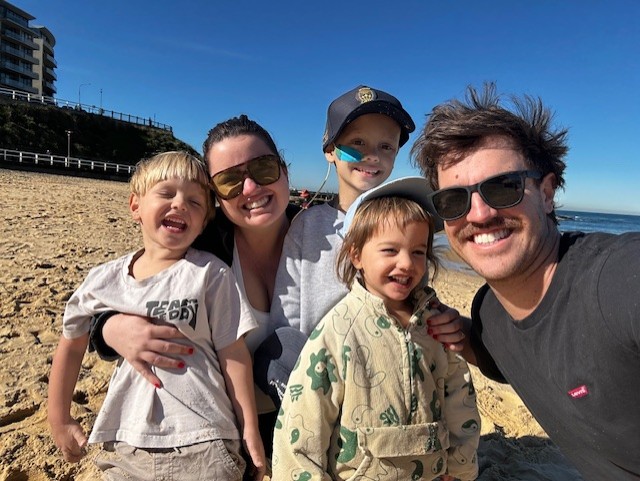
Living on the coast, near Boomerang Beach, Teddy and his two younger brothers, Hank and Bobby, were never far from the water. Their days were spent making sandcastles, climbing rocks and fishing – activities all little boys adore.
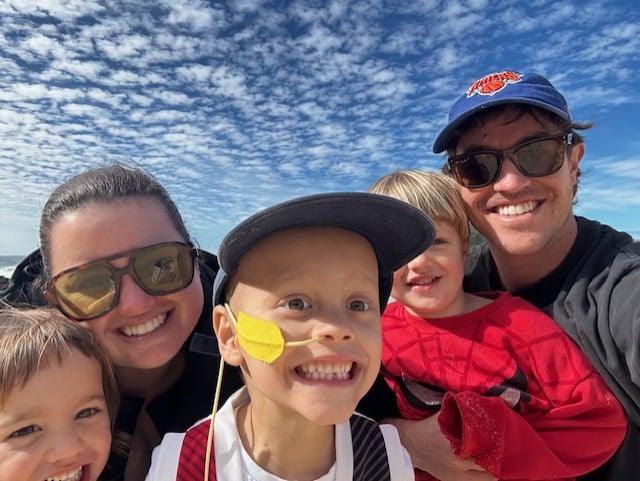
“We had a peaceful, quiet little life, and then in December last year, Teddy started to get some headaches. Within two weeks, it changed from just a little headache to vomiting,” says Beth, Teddy’s mum.
After visiting their local hospital a few times for checkups, the doctors ordered an MRI scan and found a golf ball-sized tumour inside Teddy’s head. The family were told to pack their bags immediately and drive two hours north to the John Hunter Hospital in Newcastle.
“We started treatment pretty much as soon as we arrived in Newcastle. Words will never be able to describe the seismic shift that occurred that day and how our whole world was turned on its head. Still so many questions unanswered and difficult conversations to be had all while putting on a brave face for our little man. Teddy had brain surgery four days after we presented at the hospital. The waiting out the front of the operating suite for eight hours are memories that will forever haunt us. The incredible neurosurgery team managed to totally remove the tumour, however Teddy required blood transfusions and suffered a very significant stroke in the process. When he woke up, he couldn’t speak or move and was in a tremendous amount of pain. Every night we played him messages from home with familiar voices and sounds of the beach and songs that he loved. The doctors said he couldn’t hear us but after a week of not speaking a single word, in the middle of the night Teddy started singing the song I sang to him every night. It simultaneously broke me and healed me.”
The part of Teddy’s brain that was affected by his stroke caused him to lose the ability to walk, talk and eat on his own. Within a week, he had gone from climbing rocks with his brothers to lying in bed with a feeding tube.
Learning how to use his hands again was one of the biggest challenges for little Teddy, who loved arts and crafts. “He’s an amazing little artist. He was always drawing. After he had his stroke, he couldn’t use his right hand at all for a few weeks.”
The doctors diagnosed Teddy with medulloblastoma, a form of brain cancer, and after looking for treatment options, decided that Proton therapy would be best. This treatment is a precise type of radiation that targets close to the cancer cells and not the healthy part of the brain. Proton Therapy is rare and not currently available in Australia. Once again, Beth and her husband Robert had to pack their bags, this time leaving Hank and Bobby with Beth’s mum and boarding a flight to the United States.
Because his diagnosis occurred during the Christmas holidays and was so time sensitive, the family was unable to secure government support for the $350,000 they needed to pay for Teddy’s treatment overseas. With the support of their local community and some national television coverage, they were able to raise the money within days.
“We made our way to Florida and lived there for about three months in the Ronald McDonald House. Teddy had to go under general anesthesia every day during treatment. He lost a fair bit of weight and coupled with his hair loss, definitely looked like a different child than when we first arrived in Florida. It was pretty hard for him.”
Beth flew home, part way through Teddy’s treatment, to collect Hank and Bobby so that the family could all be together in the US. Finally, after months overseas, the family were able to return home to Australia, to their little slice of paradise in Boomerang Beach for six weeks to rest and recover before heading to Newcastle so Teddy could start chemotherapy in April 2025.
While in the hospital, Camp Quality got in touch with the family to offer them a trip through their Emergency Respite program. The family spent a few days in Sydney, reconnecting with each other and sharing some well-deserved smiles.
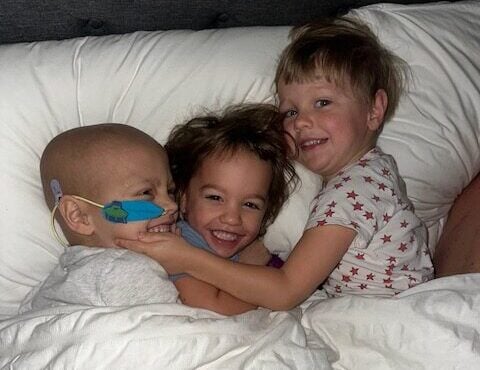
“We got to create some really special memories at the zoo and at a lovely Airbnb that overlooked the city. Our little coastal kids were looking out the window and saying, ‘Oh my gosh!’ They thought they were so adult, they stayed up late and had ice cream.”
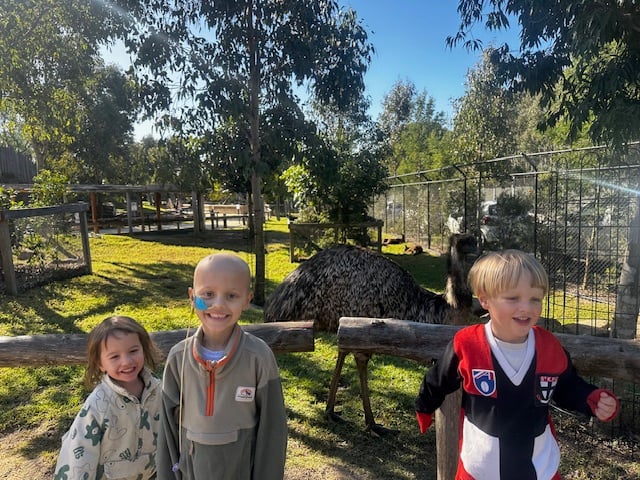
“It was so lovely, even in the middle of treatment, to just have that special experience. Not just for Teddy but for his little brothers too, because cancer doesn’t just affect the patient, it affects the whole family.”
Teddy’s younger brothers were too young to fully understand what was happening when he was diagnosed, but they still felt the upheaval of moving to the US and constantly being in the hospital. After leaving their coastal town with a population of about 500 people, the big cities could be scary. While Teddy was in the John Hunter Hospital, Hank and Bobby would often be looked after by Beth’s mum.
“We have been so fortunate to have support from my mum, looking after our other boys. I think there’s also a blessing in that that they are so little that they can’t quite comprehend everything that goes on, but they also inherently just see the beautiful, fun side of everything. It is exhausting for a mom and a dad to live out of a suitcase for a really long time, but the boys are like, “Which holiday house are we going to next?” They’re just amazing. When Teddy’s hair fell out, little Hank was like, “Ted looks a bit different, but he’s still our Ted.”
During his time at John Hunter Hospital, the Camp Quality Child Life Therapists supported Teddy through procedures, helping him to understand what was happening and see the hospital with curiosity rather than fear.
“Joe and Veronica are two of Teddy’s favourite people in the whole entire world, they are incredible. They change children’s perspectives on medical procedures and the whole mental game of turning up to the hospital every day. You know that Joe or Veronica are going to be there. Sometimes it is not even to talk, just to be there to play with them while mum and dad are talking to a specialist. They are so amazing, they are worth their weight in gold, and we just love them.
“Teddy’s really interested in science and the body. He said to me he is going to be a scientist and cure cancer, which is really sweet. He is really interested in the hospital and has always been excited to go, which sounds strange. The staff there are incredible, they even took him to look at his blood under a microscope.”
After four months at John Hunter Hospital, Teddy has now finished his last round of chemo.
“As you would expect, Teddy is pretty tired and sore. We are taking it slow and relaxing. We are looking forward to being able to go home.”
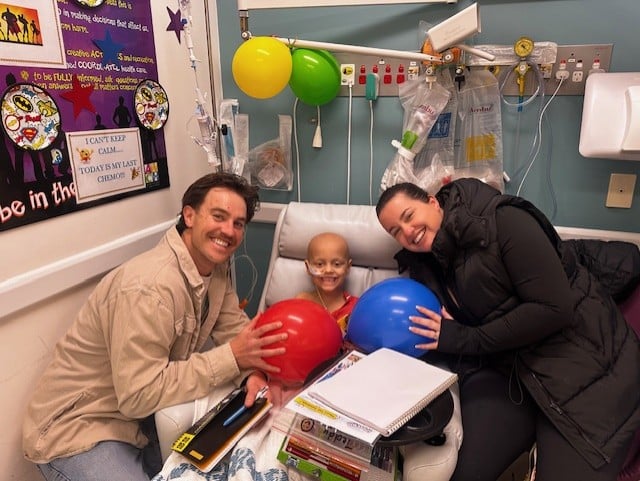
Throughout the next 12 months, Teddy is going to start going to school on and off. He will be having three monthly MRIs to keep an eye on his health, but his doctors are confident about his recovery.
“We are hopeful that Teddy will be able to leave a full life and get back to the things he enjoys. It has been a wild eight months, and now to go back to our little quiet town will be really great, really healing, really lovely.”
“Our nervous systems have been going crazy for the last eight months, and it will be nice to be able to relax and see everyone in our community. We are so thankful for all of them, how they helped with Teddy’s proton treatment and helped Robbie and me be together and not have to rush off to work.”
Camp Quality’s Emergency Respite program is for families experiencing severe mental distress following a cancer diagnosis or facing the heartbreaking reality of a child or parent’s palliative care or bereavement. Our team can work with their healthcare team and the family to help create precious memories during this heartbreaking time. This could be a short retreat together, a professional photographer or any small token we can provide to help create these memories.
Donate Today