Zoe’s Secret Weapon




Camp Quality aims to provide accurate, helpful and trustworthy information for families. Read our publishing standards.
At three years old, now five, Lola was diagnosed with B-cell acute lymphoblastic leukaemia.
Lola is a loving and protective sister. “She’s my middle child. She has an older sister, Ava, and younger sister, Remi,” says mum Laura.
“She was born with her eyes just wide to the world and that curiosity has always stayed with her. She’s so enamoured with people. People say that she’s an old soul. She’s always been incredibly caring and affectionate, but also just a crazy three-year-old too.”
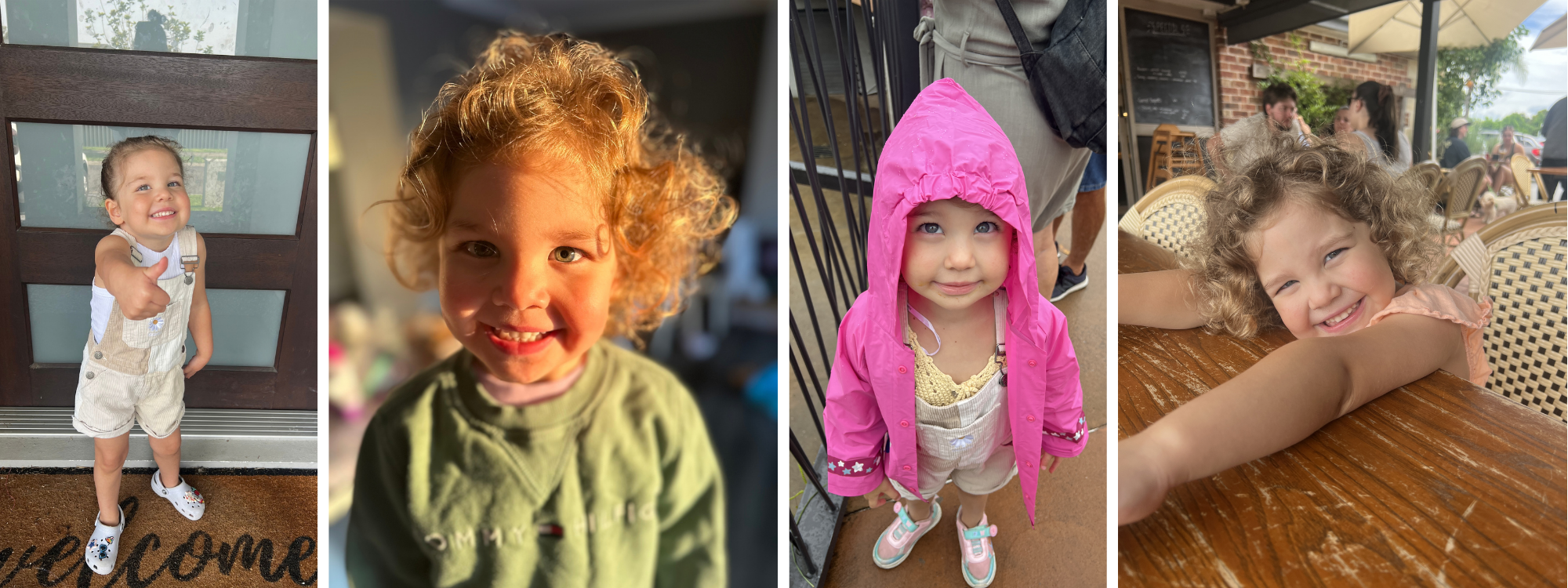
“Everyone who ever met Lola would always say, ‘She’s so happy. That smile is infectious.’ She was bubbly and so easygoing.”
Lola was everything a three-year-old was supposed to be.
In the lead-up to Lola’s cancer diagnosis, there were some signs and symptoms, but they all mimicked what would be considered a normal cold or virus for a child at her age.
After her grandfather’s retirement celebration in December 2024, Lola fell asleep, which Laura thought was a little unusual, but not too surprising given they had had such a busy few weeks. The next day, she seemed okay, so Laura wasn’t too worried.
“She had low energy and was a little bit lethargic, but she was at daycare five days a week, so I thought it was likely she’d picked up a virus.”
Laura noticed that over about a week, Lola was flat and had a temperature on and off. But it was on Christmas Day that Laura really noticed she wasn’t herself and began to think something wasn’t quite right.
Alarm bells really started to ring when Lola didn’t want to go swimming after Christmas Day.
“It was one of her favourite things to do. She just loved the beach.”
Looking back at photos now, Laura recalls how withdrawn, pale and “out of it” Lola seemed. Given it was the holiday season and difficult to get into a GP, Laura booked a Telehealth appointment.
“I explained her symptoms and the GP assured me that it was likely just a virus. There was a lot going around. It was the end of the year and a busy time anyway.”
The GP was reluctant to perform a blood test given how traumatic they can be for little kids.
At this stage, it had been about two and a half weeks since Lola had started seeming unwell. Laura recalls that on five January, Lola’s appetite had also decreased, and bruises had begun appearing on her legs. Laura started Googling her symptoms and leukaemia came up.
“We hadn’t really been impacted by cancer and I think as a parent it is your worst nightmare, so you push it to the back of your mind and think that it’s something that happens to other people, not you.”
Although Laura didn’t want to think the worst, she still felt something was wrong. Lola had been sick before and had always bounced back after a few days.
After a nap, Lola woke up with a high fever and Laura decided it was time to take her to the hospital. Laura packed Lola into the car while her husband, Brad, stayed home with their two other daughters.
After arriving at hospital, they were triaged, told they were Category Two and rushed through. Laura recounted Lola’s symptoms to the doctors, who initially suspected a virus or perhaps pneumonia. But because her symptoms had been ongoing, they decided to do a blood test.
“I’ll never forget having to physically restrain her in these straps, held down on a bed just to get blood taken. That was the beginning of the medical trauma for Lola.”
By then, Laura’s mum had come to sit with her at the hospital. After an issue with the blood test, the medical team didn’t want to put Lola through another test, so they gave her antibiotics and sent her home while they waited for results from the full blood count. They told Laura to take Lola to their paediatrician the next day.
The following day, Laura and Brad took Lola back to the doctor, who wanted to perform another blood test out of an abundance of caution.
Laura, Brad and Lola were put in a ward to wait for the results.
“It was Christmas so it was eerily quiet. There were no other patients. One hour turned into two, which turned into three. I remember looking at Brad and saying something was wrong.”
A few minutes later, a pair of doctors walked into the room carrying a box of tissues and Laura just knew it was bad news.
“They walked into the room and I remember screaming, ‘Get out, get out,’ because I knew what they were going to say. I was rocking back and forth with my head between my knees while they delivered the news that Lola’s blood results were most likely leukaemia.”
From there, Lola was immediately transferred to John Hunter Hospital in Newcastle. In the middle of it all, Laura had to call her parents to tell them the news.
“Once I called my mum and dad, I couldn’t talk to anyone else. I went into almost a comatose state.”
All Laura and Brad could do was drive straight to Newcastle so Lola could begin cancer treatment. When they arrived, Laura had to ask where the oncology ward was, words she never thought she would have to say.
“I remember walking like a zombie. I wasn’t even aware of where I was. I was so frightened. We walked downstairs to this dark, dreary place, and we were put in a room and it went from there.”
By the next morning, Lola’s treatment team confirmed her diagnosis as B-cell acute lymphoblastic leukaemia.
Lola had surgery and started chemotherapy the next day.
“People often ask me how we did it. We didn’t even have time to comprehend what was happening. We were just thrown into it.”
Laura recalls how hard it was for her and Brad to absorb all the information they were given about what treatment would look like for Lola. At times, they had to take breaks just to give themselves a chance to breathe.
“A lot of people in life have a time where there is a before and after, a line in the sand. This was our before and after. Everything changes, your views, your perceptions. Everything.”
A social worker encouraged Laura to step outside for a few minutes.
“I remember walking around in silence with Brad, and he looked at me with tears in his eyes and said, ‘Why are people smiling? There’s nothing to smile about. There’s a ward full of kids with cancer, don’t they know?’”
Laura says this was when it really sank in that, whether or not they wanted to be part of the “cancer club,” they had been thrust into it. She says she and Brad felt the aftershock for months.
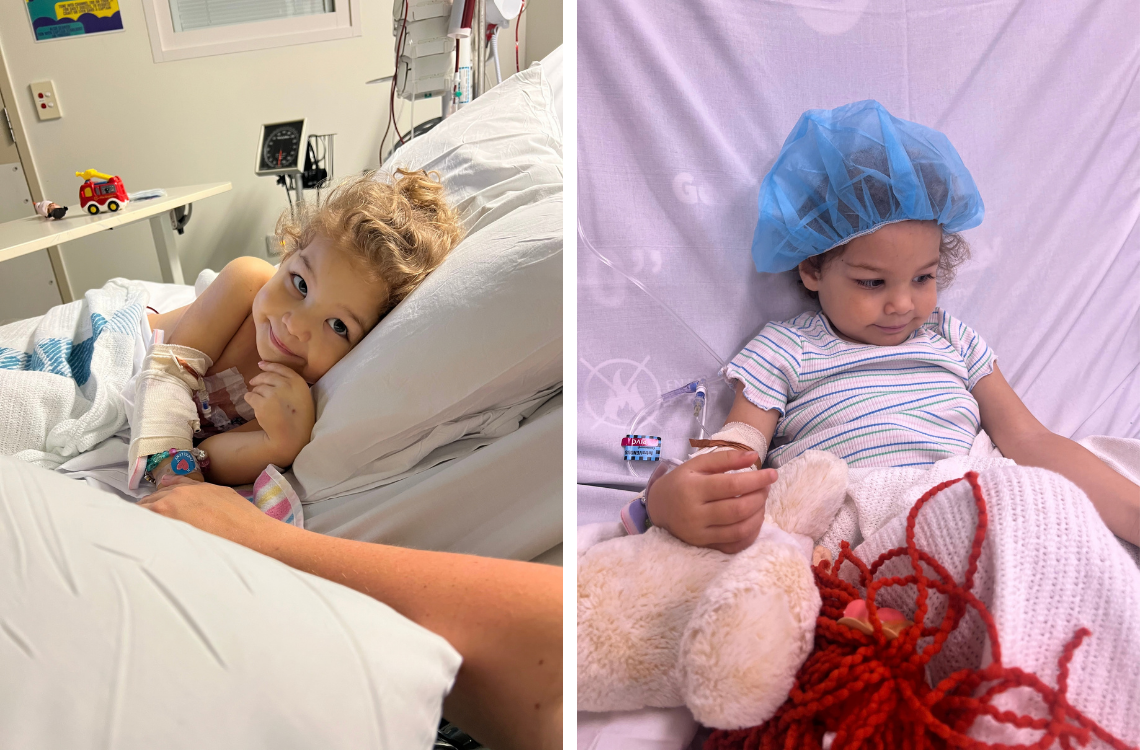
“We were very much in fight or flight those first few weeks and months.”
After the initial diagnosis, Laura stopped working and became Lola’s full-time carer. She and Brad also grappled with how to tell their oldest daughter about Lola’s diagnosis.
“Their lives have also changed. It was a really, really hard time for Brad and me. I felt sick at the idea of having to have that conversation with Lola’s older sister because I knew that she had enough knowledge and understanding to know what was going on.”
Lola had her first surgery to insert a PIC line so chemotherapy could begin straight away. The first two weeks were incredibly intense.
Lola spent 10 days straight in hospital before she was able to go home for just one night to be with her sisters.
Over the course of treatment, Laura says it became incredibly difficult for her and Brad to look after themselves.
“We weren’t eating, we weren’t caring for ourselves because we were so hyper-focused on getting Lola and her sisters through treatment.”
When Lola started steroids, she began to change emotionally and physically.
“It was terrifying for us. They warn you what it’s going to be like, but you’re in shock that it goes in one ear and out the other. It was a stark difference from my happy-go-lucky girl to this defiant, angry child with an insatiable appetite.”
Laura says that in those first few months, their community rallied around the family, dropping off food, helping with childcare, and taking care of chores. Slowly, they were able to find their feet.
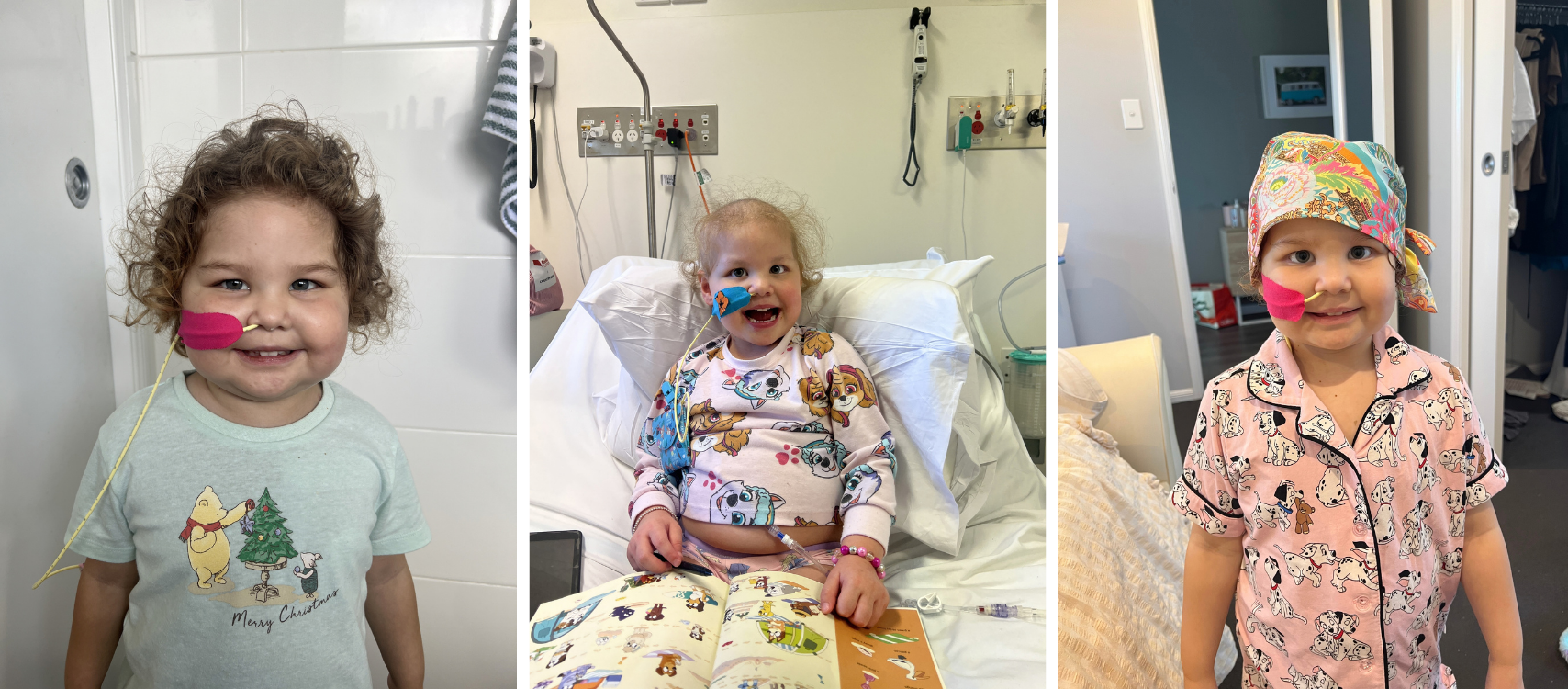
“Those first few months we were watching her like a hawk for a fever. We live 45 minutes away from the hospital, which was scary because they said if she did spike a fever she had to come to ED straight away. I remember the first few times we had to throw her in the car to get to hospital, I was beside myself thinking she was going to die in my arms, not knowing what was happening. It was just fight or flight.”
Laura credits her friends, family, and gym community by helping pull them through that period.
At the beginning of treatment, Brad and Laura made a pact that, wherever possible, they would try to keep a small part of their routine by going to the gym so they could have a break.
“If you can hold onto one little bit of normality, whether it’s still going to the gym or still going for your walk, you need to do that to keep yourself sane. Even throughout this whole journey, we’ve used exercise as therapy for us.”
The Uprise Gym and its community became a safe place for Laura, somewhere she could breathe, look after herself and feel supported throughout Lola’s treatment. Brad found support in his own gym community too.
“It was a saving grace for us through those first few months. Even if it was only an hour or two a week where we both had that time, we felt like, ‘Okay, we’re still Laura and we’re still Brad, and we’re not just at hospital 24/7.’”
One day, while Lola was receiving treatment on the ward, the Camp Quality puppets came to visit.
“Every time the puppets would come into the day unit, Lola’s eyes would light up, and she would be so impatient to see them.”
“They were there as a relief for Lola, keeping her preoccupied, allowing her to still be a little child and bringing that beautiful play element, with the knowledge that we knew the camps existed for when we were ready.”
“They took away some of the heaviness while we were all sitting there waiting for our children to receive cancer treatment.”
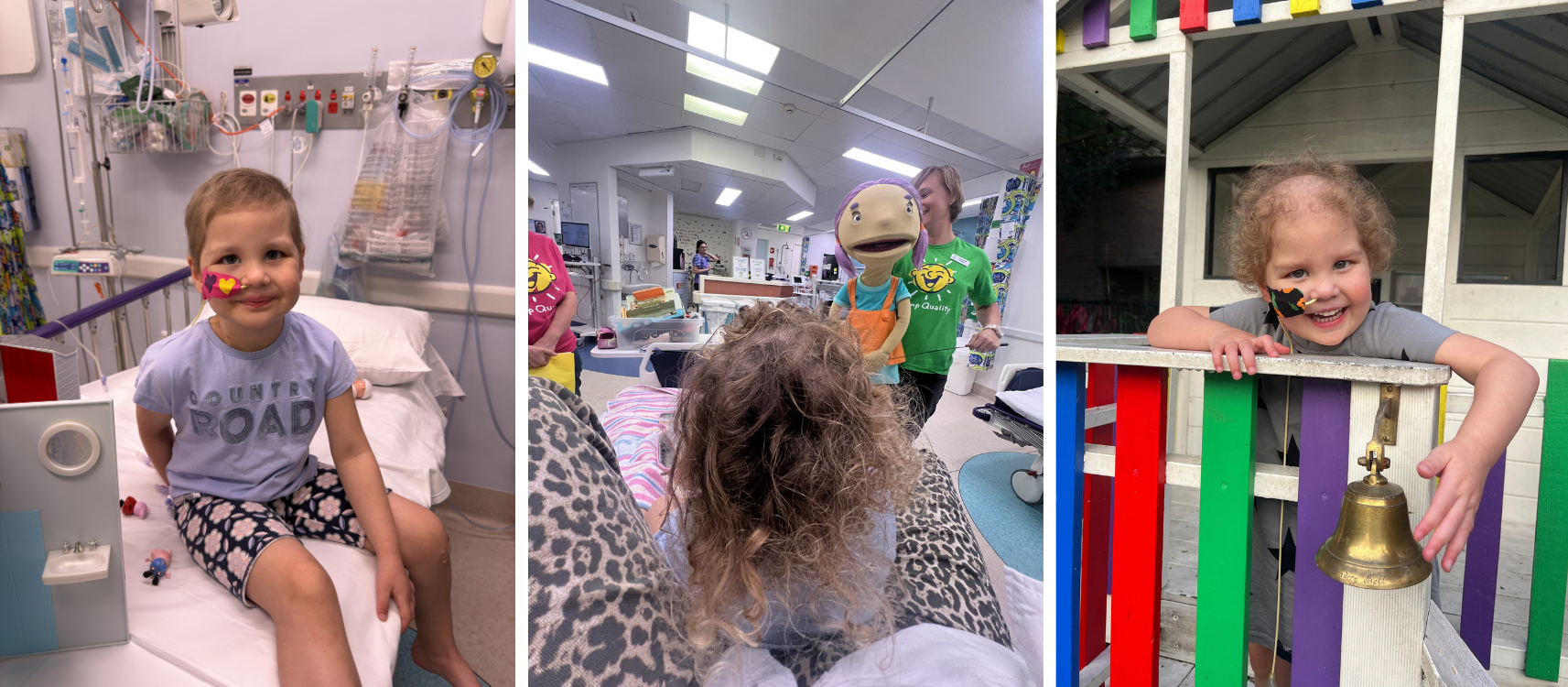
At that point, however, the idea of going away as a family or planning time together still felt far too overwhelming.
“We were in such a pressure cooker last year that to even think about going away or on a day trip felt so foreign to us.”
Laura says family holidays and outings disappeared from their priorities because the risk of Lola becoming unwell felt too great.
“It’s so far down the priorities list and when you do think about it, it’s not worth the risk of Lola getting sick to go away. We spent a good nine to 10 months self-isolating, wearing masks and not going out anymore, just being cautious because it was drilled into us that a cold could mean an ICU admission for Lola.”
“It impacts everyone in the family. With her sisters, we were constantly saying, ‘We just can’t go there, we have to cancel that holiday, we have to cancel this trip.’”
Lola faced another major setback when she was diagnosed with VOD, a life-threatening side effect of one of the chemotherapy treatments she had received. Her liver started to shut down, and the blood vessels in her liver became blocked and stopped working properly.
“It was the sickest I’d ever seen her. We spent nearly three weeks not sure if she was going to pull through. It was really, really horrific for us. She was yellow, her stomach was expanded and swollen, and it took so long to know whether the treatment worked or not. At one point the oncologist told us, ‘I can’t tell you the outcome because I do not know.’”
Fortunately, Lola turned a corner and eventually began to get better.
Although she was still in hospital at the beginning of December, she was able to light the Christmas tree at the hospital, which was incredibly special for the family.
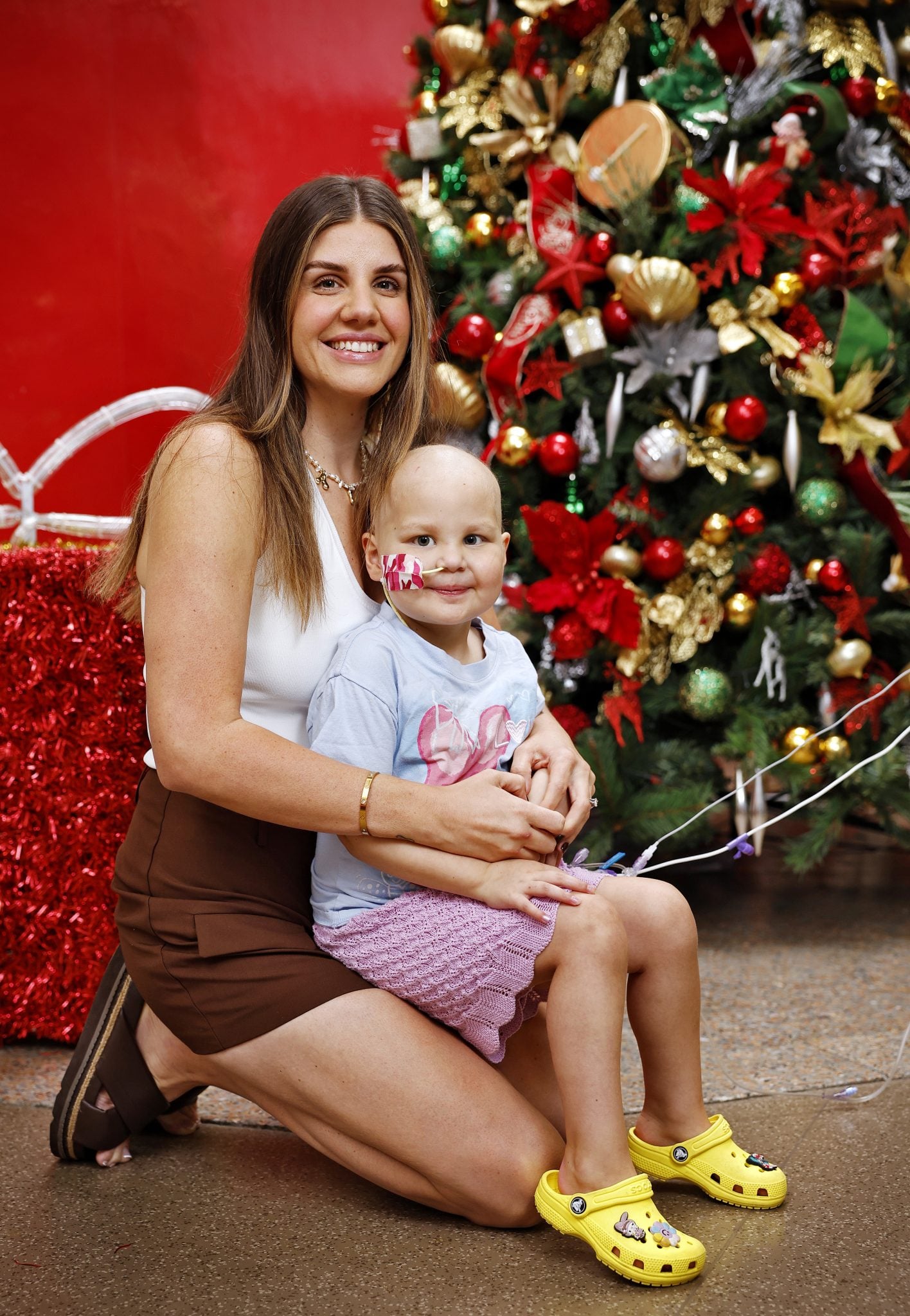
Just a week later, an opportunity came for the family to stay at a Camp Quality Family Retreat. Lola’s treatment team gave her the all-clear.
“I think it was 40 minutes from us, so it felt doable. At that point, we just needed it. She needed to be outside in the air, in the sunshine. She needed to be with her sisters. We’d had a really rough trot.”
“It was just the most special time. I think the best way I can explain it is that, for the first time, we were able to feel like a family again.”
Laura’s family also met them at the holiday park for a couple of days.
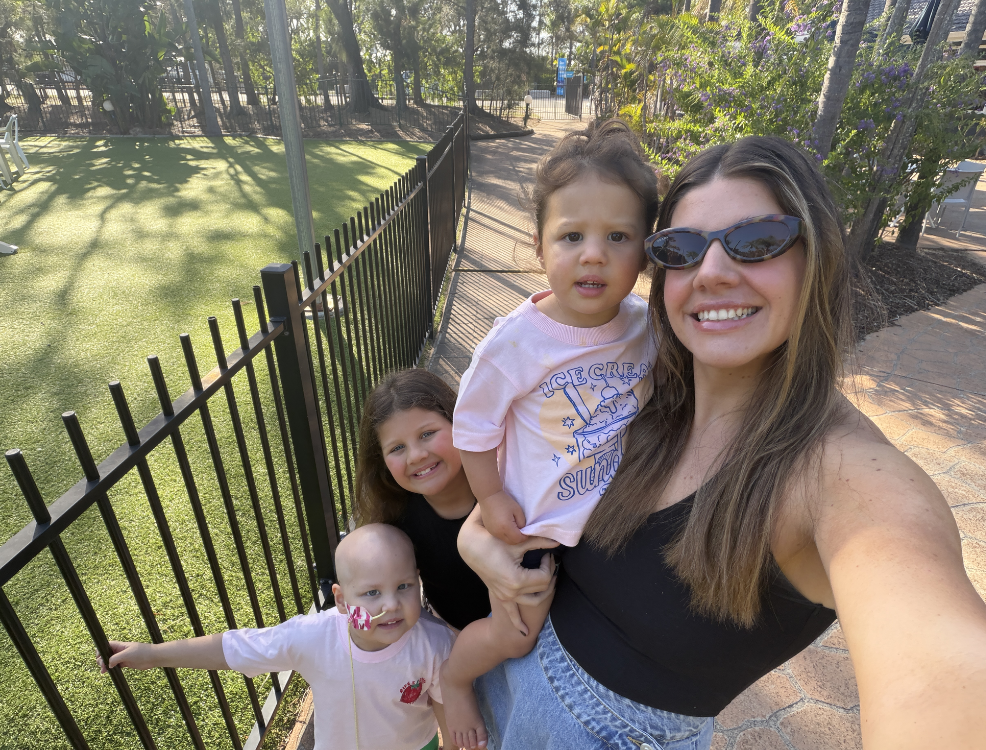
“For a couple of days, we could just breathe and exhale, especially after the treatment Lola had just had. It was an emotional couple of days for us, just to have that respite and to be cared for in that way, and to see her climbing on the play equipment, walking around with her sisters and getting ice cream.
“It was the little things you take for granted that were really, special on that trip for us. We felt connected as a family.”
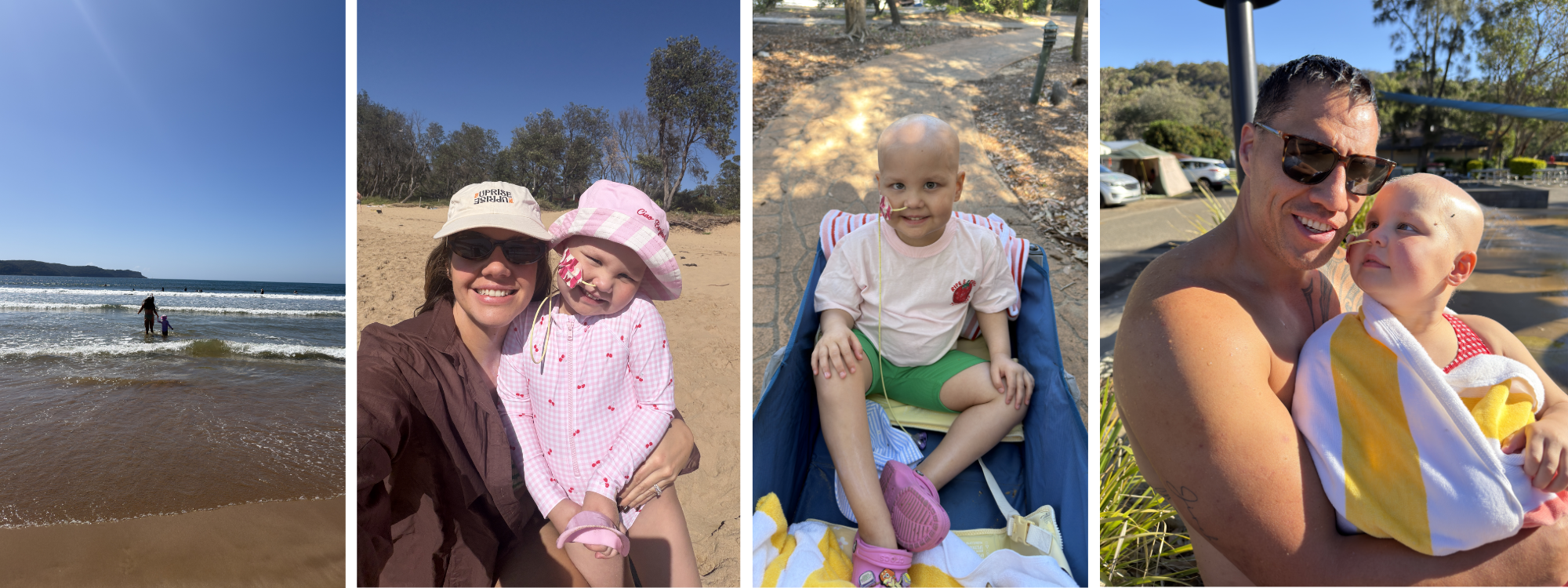
Lola is now on maintenance chemotherapy, and life is slowly returning to a new normal, although that has come with its own challenges.
“She’s been admitted so many times just with a fever because she picked up rhinovirus or RSV. It’s not smooth sailing.”
“This year I do feel like we’re in a bit of a groove, as sad as that sounds. When we know that she’s not well, I’m receptive to how she’s feeling and how she’s looking, and I can often tell when she’s going to get a fever.”
When Lola was first diagnosed, Laura says there was no time to process what was happening or really take care of themselves. When things finally started to slow down, everything that had happened hit her “like a tonne of bricks” and she was forced to begin processing the experience.
“Brad and I sat down on New Year’s Eve and asked, ‘What’s our word going to be for 2026?’ We both said, ‘healing.’
“Our word was healing in terms of healing Lola this year. She still has treatment, but it’s not as intensive. It’s about starting to heal her little body, healing the relationship with our daughters and having that quality time. One of the big pieces for us both was also to heal ourselves.”
Lola is also working with a physiotherapist to regain her strength, while remaining very much in active treatment. She still takes oral chemotherapy every day and has lumbar punctures and steroids every three months.
Laura says it is simply a different kind of hard.
“She’s getting stronger and she’s growing like a weed. She’s so tall now, she looks so different to the child she was at three. Maintenance is beautiful too, because her hair starts to grow back and she starts to look more like herself. I get to do her hair in the morning now, even the tiniest little pigtail at the front, and that gives her joy.”
Lola is now transitioning back to her Early Learning Centre, which has brought another big adjustment after spending so much time in hospital.
“It’s been a really big learning curve for her and a big change in environment. Last year she was in hospital and she could just touch a buzzer and someone would come to her.
“This year she’s having to learn that she needs to wait her turn, she has to be patient and she has to be amongst 20 other children. It’s not just about her.
“Last year our whole focus was on Lola, and rightly so, because we were trying to keep her alive. This year, while we’re still trying to keep her alive, we’re also aware that we’re trying to mould her and help her grow into a beautiful young child.”
Straight away, the Early Learning Centre was keen to have Camp Quality’s Cancer Education Program visit to help Lola settle back in.
“They came out to the school and did a big puppet show. The educators said it was one of the best days of their teaching careers, just seeing how beautiful it was for Lola to feel like part of a community. It was like, ‘These are my people. I know these puppets. These are my friends.’”
“It was a real highlight of our journey so far. Seeing someone advocate for Lola and explain what she’d been through, even though she couldn’t find the words, was a real milestone for her.”
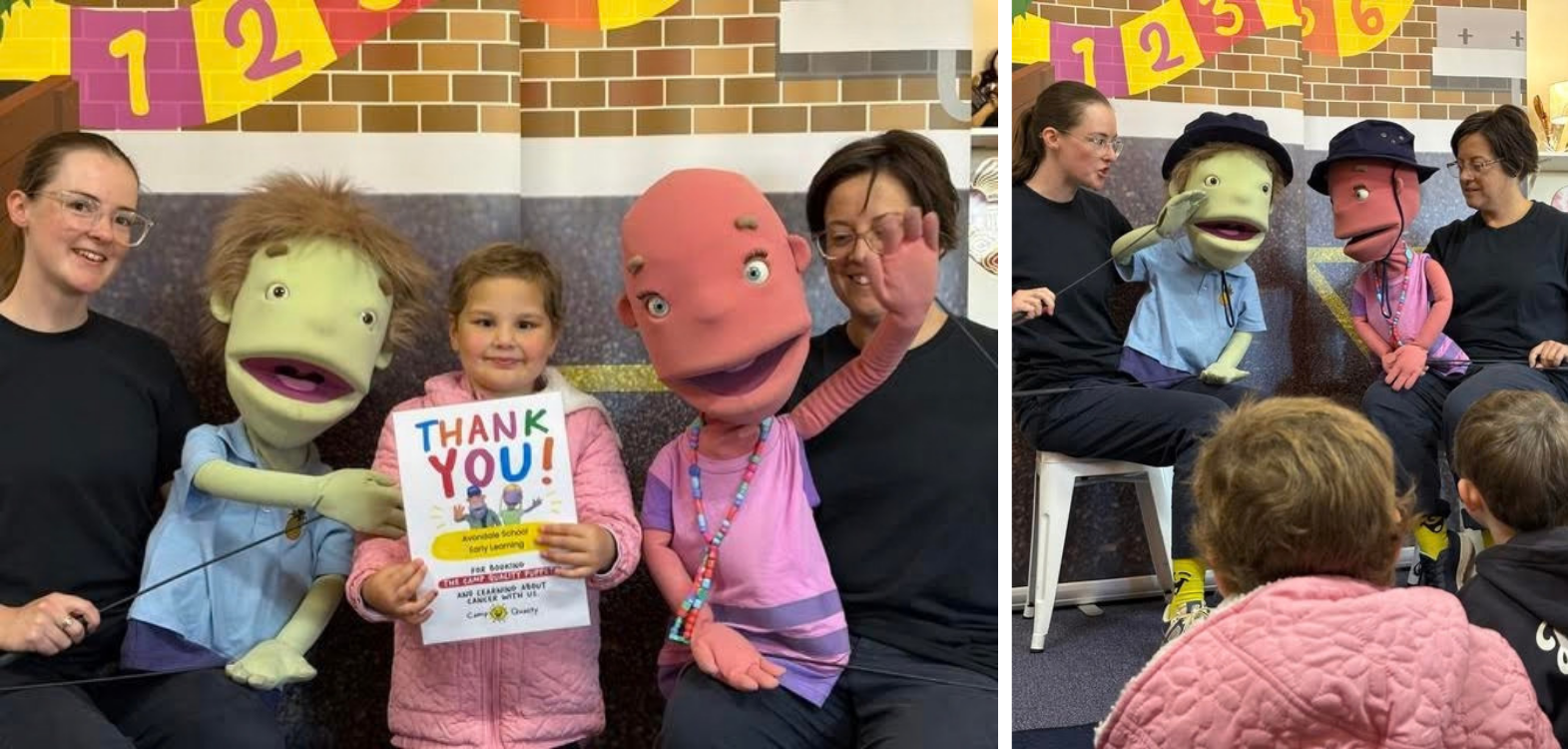
Laura says the family still feels cared for by Camp Quality, and this year they have been in a position to experience more of the programs and activities available.
“We still feel like we’re being cared for by Camp Quality, even more so this year because we’re actually able to do the things they provide. We can go to family camps and incredible family days out. We went to a snow day in the Hunter Valley just a couple of months ago, and it was so much fun.”
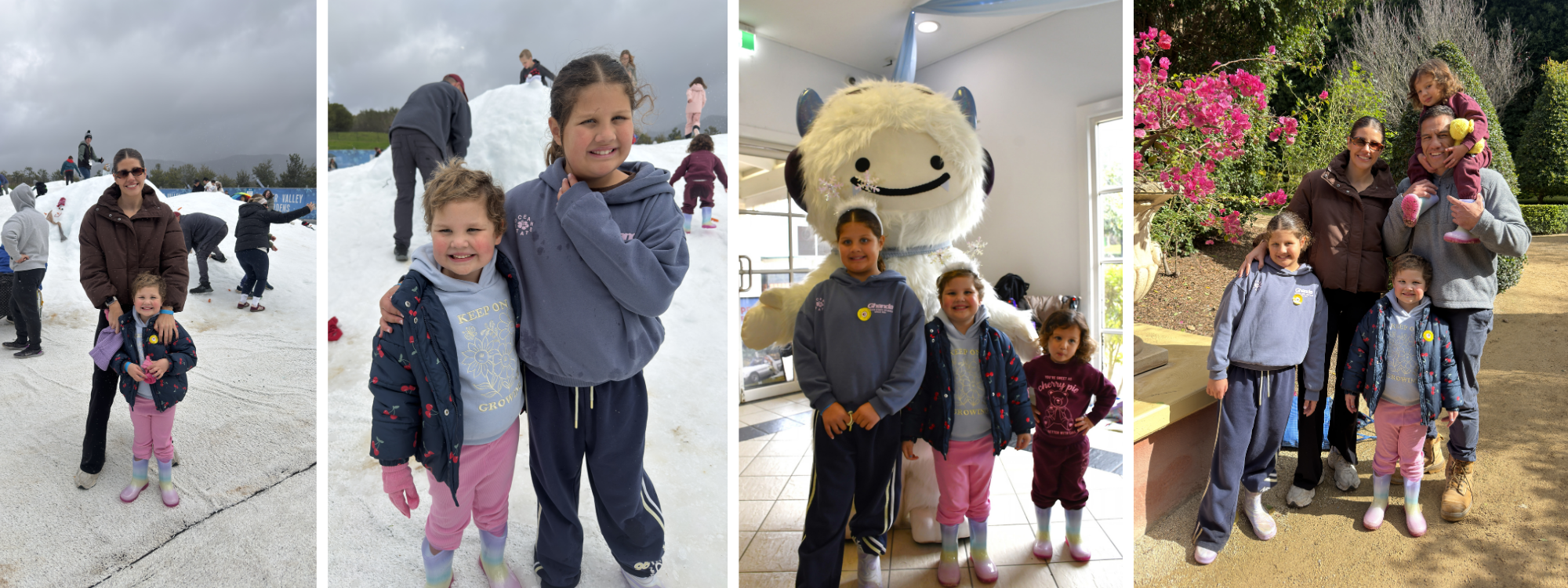
Through these events, the family has also built connections with Camp Quality volunteers.
“You meet all the volunteers along the way. I met one volunteer at one event and then saw her again at another. We both recognised each other and realised where we’d met. It’s so nice to build those connections with the volunteers. They are incredible. They are beautiful.”
Laura also spoke at a recent event, sharing her family’s experience and what Camp Quality’s support has meant to them.
Her experiences have helped her understand how broad Camp Quality’s support is for children and parents in different circumstances.
“They don’t take away the pain or what we’ve been through or what we’re going through, but they provide light. They provide some lightness to your days and to your journey. They provide respite.
“Especially with the family retreat, it provided something we hadn’t had and that had been taken from us. To get that back, even in a small way, to just be a family again, was so precious. We didn’t have to do anything fancy. It was just being together. It was really special for us.”
Laura believes the experiences Camp Quality has provided have helped Lola and the whole family navigate their cancer journey.
“I don’t think Lola would have gotten through it in the same way. She has kept her happiness. She’s changed as a little human, definitely. She’s not the same child she was. I’m not the same person and I’m not the same parent I was 18 months ago.
“I think the things Camp Quality can provide us and families like us really do help us get through the journey. It strings together little bits of light that give you a glimpse of hope and remind you that you are not just a cancer family. Cancer isn’t the only thing about you.
“It’s not your identity. For that weekend, we’re just a family enjoying a holiday with our children.”
Laura now wants to use her family’s experience to help others understand the impact childhood cancer has on the entire family, and the role Camp Quality can play along the way.
“If I can help shine a light on Camp Quality, then that’s what I’ll do. And if I can help show that lived experience of how cancer impacts families, that’s easy for me to do. I had no choice but to get through it. No one ever wants to hear about a child being sick because it’s our worst nightmare as parents.”